
Contributor:
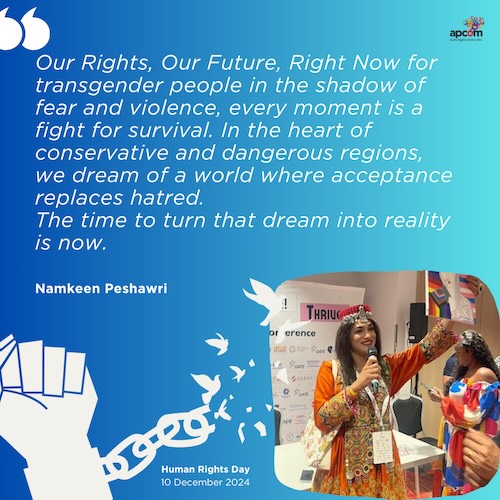
Namkeen Peshawri
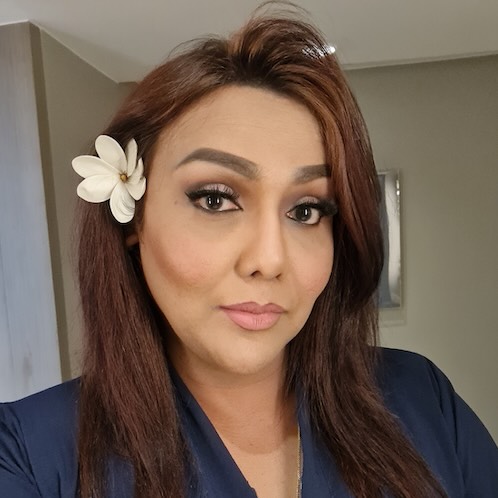
Namkeen Peshawri is the founder of Trans Support Group, a pioneering organization advocating for Transgender rights in Pakistan. As a passionate activist, artist, dancer, and researcher, Namkeen uses creative expression to promote gender diversity, inclusion, and peace-building. She has been instrumental in advancing the rights of marginalized communities in Pakistan’s most conservative regions, including the border areas near Afghanistan. Namkeen’s advocacy was pivotal in drafting and passing the landmark Transgender Protection of Rights Act 2018, a critical step towards securing legal recognition and protection for transgender individuals in Pakistan.With over a decade of experience, Namkeen has worked with renowned national and international organizations such as the World Health Organization (WHO), International Rescue Committee (IRC), GIZ, and the British Council. Her work spans gender diversity, equity, and inclusion, with a focus on challenging societal norms and fostering empowerment for transgender communities. Through the Trans Support Group, Namkeen has provided a platform for advocacy, capacity building, and creating safe spaces for transgender individuals, driving meaningful change in policy and social attitudes. Her dedication continues to inspire progress and bridge divides in some of the most challenging and underserved areas of the region.
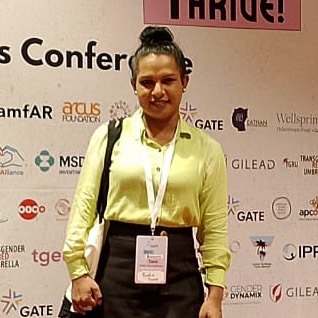
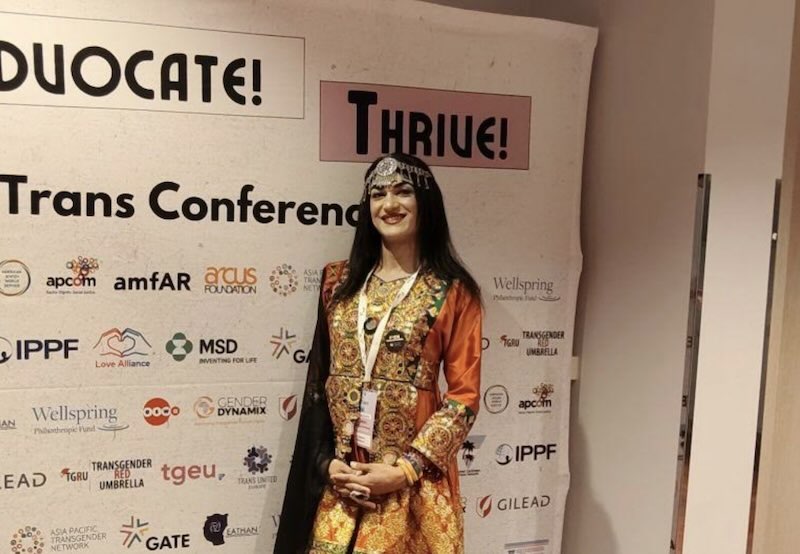
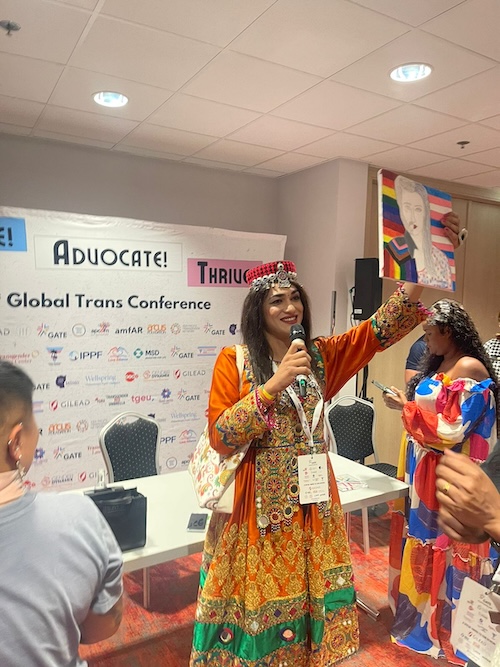
APCOM was one of the partners of the Unite! Advocate! Thrive! Global Trans Conference 2024
held prior to the AIDS 2024 in Munich, Germany in July 2024.
We brought together trans and gender diverse activists from Asia and the Pacific to address the lack of specific and inclusive global strategies
for our communities, and to formulate a unified response to anti-gender and anti-rights opposition.
What are your main reflections/take away from the recent Unite! Advocate! Thrive! Global Trans Conference 2024?
The Unite! Advocate! Thrive! Global Trans Conference 2024 was an inspiring and transformative experience that highlighted the resilience and advocacy of trans and gender-diverse communities worldwide. One of my key takeaways was the importance of fostering collective action to address the multifaceted challenges faced by trans individuals, particularly in accessing healthcare, legal protections, and social inclusion. The sessions provided invaluable insights into global progress, as well as the persistent gaps that demand urgent attention.
GATE’s Trans Road Map for AIDS 2024 was an exceptional tool, guiding participants through critical sessions that addressed pressing issues such as HIV prevention, gender justice, and community-led healthcare solutions. The Trans Networking Zone in the Global Village stood out as a vibrant and supportive space where trans and gender-diverse individuals, allies, and friends could connect, relax, and build solidarity. This space not only fostered meaningful connections but also reaffirmed the power of community in driving advocacy and creating safe, affirming environments.
What is the situation of trans people in your country?
The situation of transgender people in Pakistan, particularly in the border regions near Afghanistan, is fraught with challenges rooted in deep-seated conservatism, societal prejudice, and the influence of extremist ideologies. While the Transgender Persons (Protection of Rights) Act 2018 was a historic milestone that granted legal recognition and rights to transgender individuals, its implementation faces significant resistance, especially in conservative areas. In these regions, cultural stigma, coupled with the presence of militant ideologies, poses a constant threat to the safety and dignity of transgender individuals.
In the Afghan-Pakistan border areas, the situation is even more precarious. Transgender people often face violence, discrimination, and exclusion, with limited access to healthcare, education, and employment opportunities. Many are pushed into survival activities, such as begging or sex work, to make a living. Fear of violence, including targeted attacks and harassment, is a daily reality, and societal support remains minimal. Despite these challenges, grassroots advocacy and community-led initiatives, like the Trans Support Group, are working tirelessly to create safe spaces, amplify voices, and push for the enforcement of existing legal protections to ensure a future of dignity and inclusion for transgender people in these regions.
What and how are you/your organisation doing to address these challenges?
My organization, the Trans Support Group, is actively addressing the challenges faced by transgender individuals in Pakistan, especially in the border regions near Afghanistan, through advocacy, community-building, and capacity development. We work to create safe spaces for transgender individuals, provide awareness on their legal rights, and offer support for accessing healthcare, education, and livelihood opportunities. Despite our efforts, we encounter significant challenges, including registration hurdles and funding barriers, which limit the scale and sustainability of our impact.
The registration process for organizations like ours is often fraught with bureaucratic red tape, societal stigma, and discriminatory attitudes, making it difficult to gain legal recognition and operate freely. Additionally, securing funding is a constant challenge. Many donors hesitate to support initiatives focused on transgender issues due to societal backlash or political sensitivities in the region. To address these barriers, we rely on collaborations with international organizations, advocate for inclusive policies with local authorities, and develop community-driven programs to ensure we continue empowering transgender individuals and fostering resilience against discrimination and violence. However, sustainable funding and streamlined registration processes remain critical for expanding our reach and impact.
What support do you/your organisation need?
Technical and financial support are vital for sustaining and expanding the impact of organizations like the Trans Support Group. We require technical assistance to build the capacity of our team, develop strategic advocacy plans, and implement inclusive programs that address the unique challenges faced by transgender individuals, particularly in conservative and conflict-affected regions. Financial support is essential to cover operational costs, organize community-driven initiatives, and provide critical services such as legal aid, healthcare access, and vocational training. Reliable funding also enables us to overcome barriers like bureaucratic registration processes and scale our efforts to promote equality, dignity, and safety for transgender communities.
Anything else you wish to add?
To continue our vital work, we urgently need collaborations with donors who are committed to advancing transgender rights and gender equality. Financial assistance will enable us to overcome operational challenges, scale our programs, and reach more transgender individuals in Pakistan, particularly in the marginalized, conflict-affected border areas.
See also: