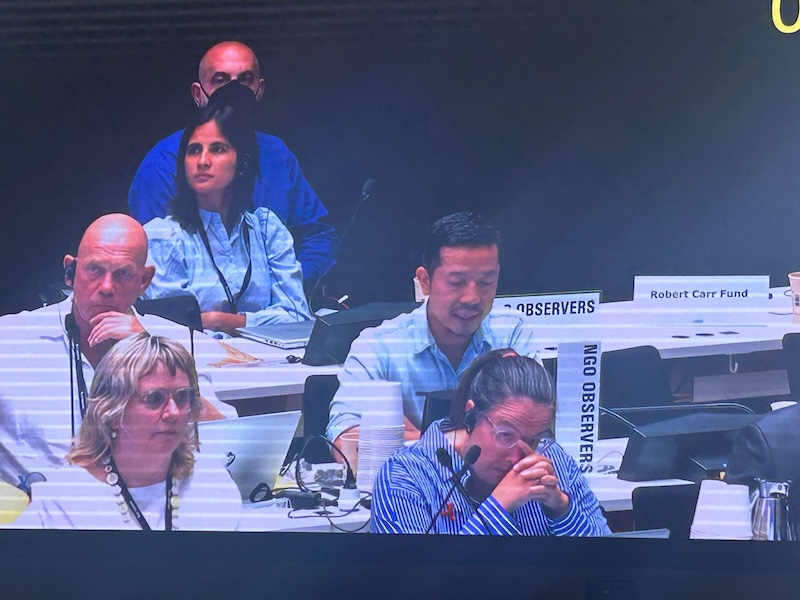
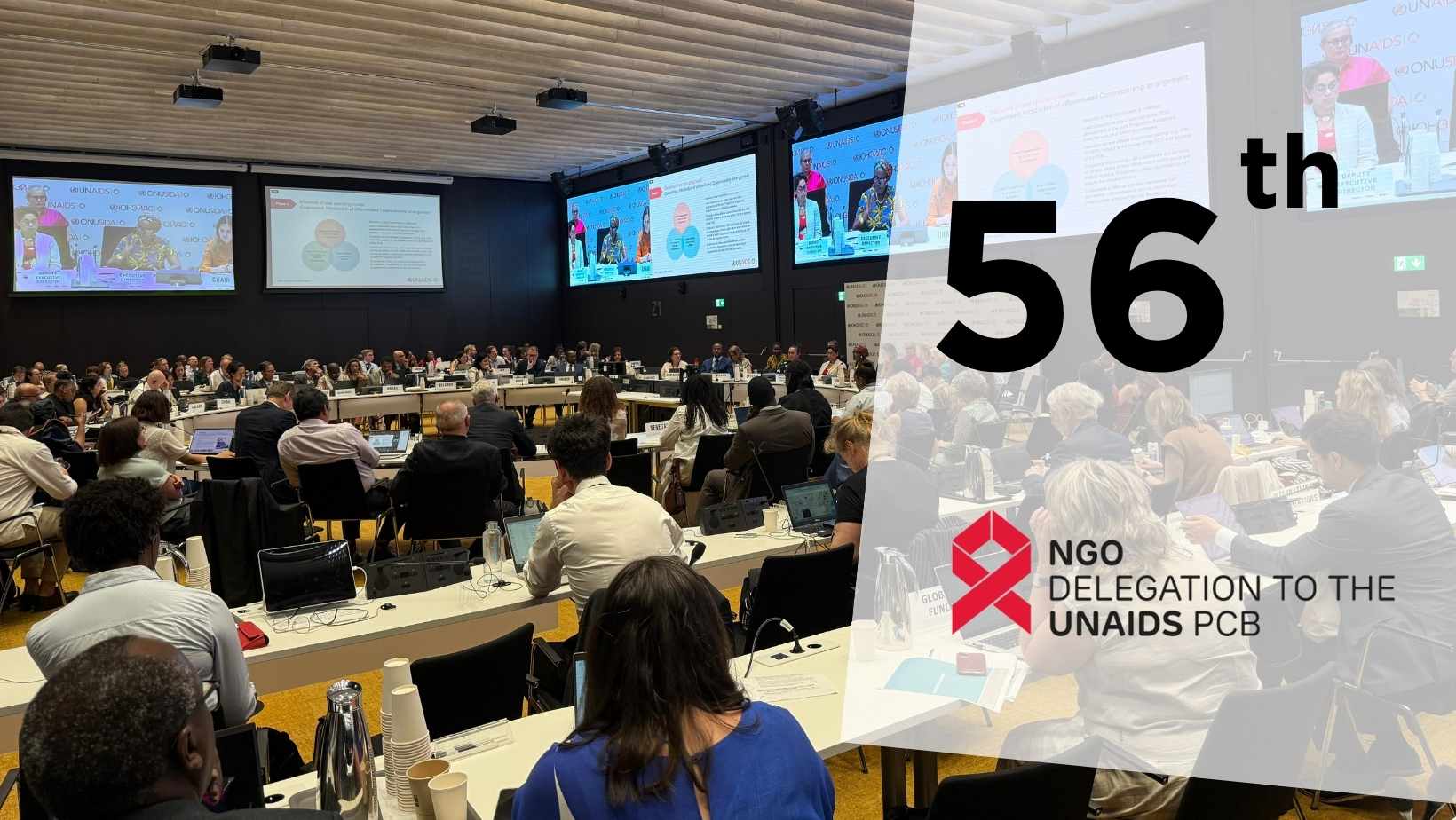
This meeting was a pivotal Programme Coordinating Board (PCB) meeting for the Joint Programme and the global HIV response. Due to the deepening of the funding crisis and institutional restructuring, the key agenda items include the outline of the Global AIDS Strategy 2026–2031, revisions to the Joint Programme Operating Model following the recommendations from the High Level Panel which APCOM was part of.
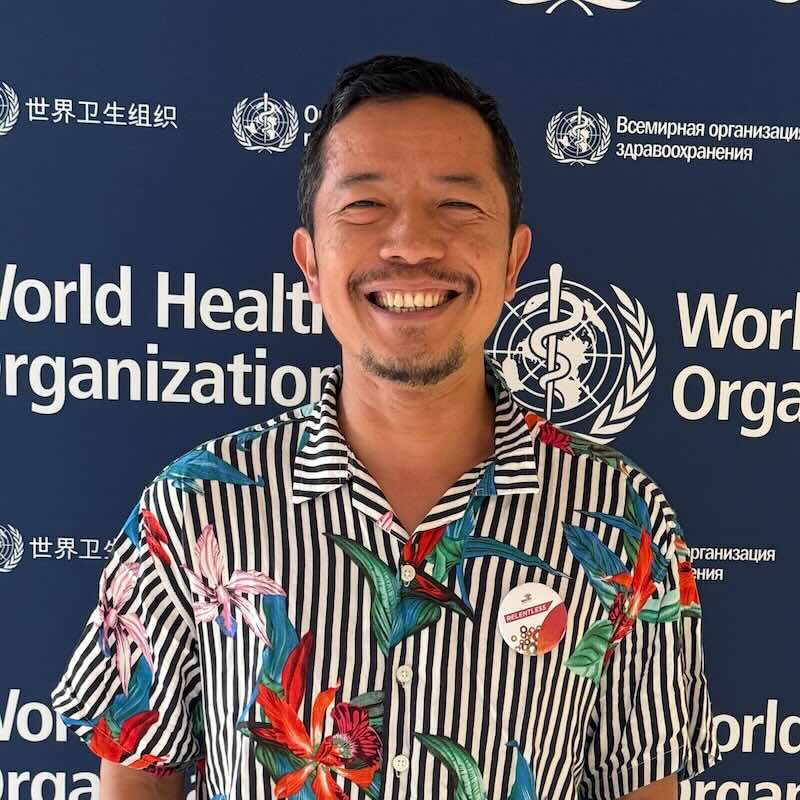
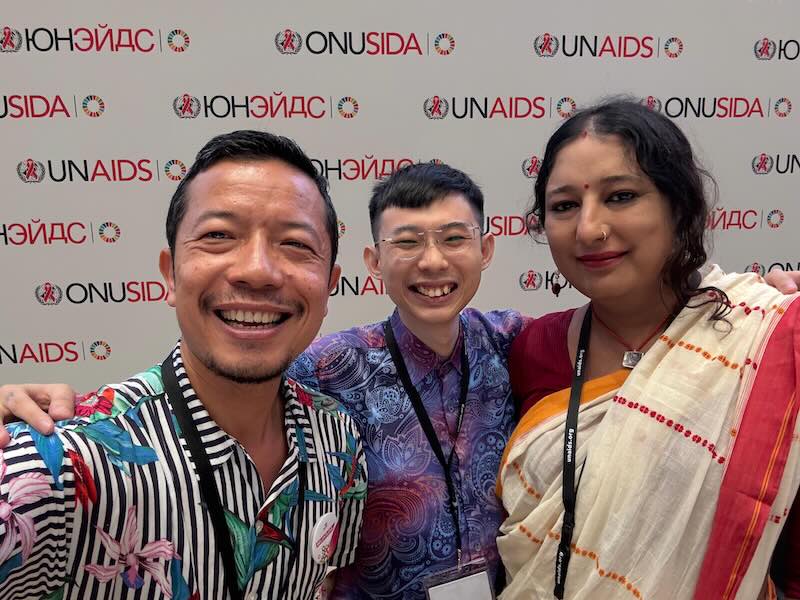
APCOM, represented by Midnight, Executive Director attended the meeting in Geneva, Switzerland which took place 24-26 June – and made three interventions.

Thank you Madam Chair,
Happy Pride Everyone!
I speak on behalf of my organisation, APCOM, based in Bangkok, Thailand – working on health, human rights, and wellbeing – particularly with gay men and other men who have sex with men, and LGBTQI communities.
Thank you Winnie for your report of the difficult changes UNAIDS secretariat have had to make.
We, the community, have always put the needs of our community first, and for decades we have demonstrated leadership which has taken us this far.
Can you imagine the global AIDS response without community mobilisation? Would our governments have stepped up without the community in crisis shouting out the issues that ultimately affect us all?
Leadership from each member state is very much needed right now.
This is not a time to take a step back, as we know rebuilding will take away so much progress that could be made.
APCOM and members of Pride 7, an engagement group of the G7, focusing on the promotion and protection of the rights of LGBTQ+ persons and associated policy recommendations.
At the recent Pride Summit in Ottawa, Canada – we recommended in our communique that the G7 members continue to invest in global health structure, including UNAIDS, WHO, and the Global Fund. We saw the leadership of Canada who recently hosted the G7 Summit, to uphold human rights of LGBTQI, democracy, and multilateralism.
I hope that other member states continue to publicly stand for human rights, and financially support the global health structure, including the UNAIDS joint programme in particular for technical support to countries.
In times of crisis, leadership is most needed – and echoing Brazil and Kenya’s intervention, can we really think of UNAIDS being sunsetting? In the Pacific, we saw a surge in the HIV infections in Fiji when the UNAIDS office was transitioned – and with much reduced resources and country presence, we can foresee there will be a resurgence of the HIV epidemic. Therefore, can we here, the structure that is tasked to end AIDS, can consciously live with the decision that will negatively affect the lives of millions around the world?
Thank you.
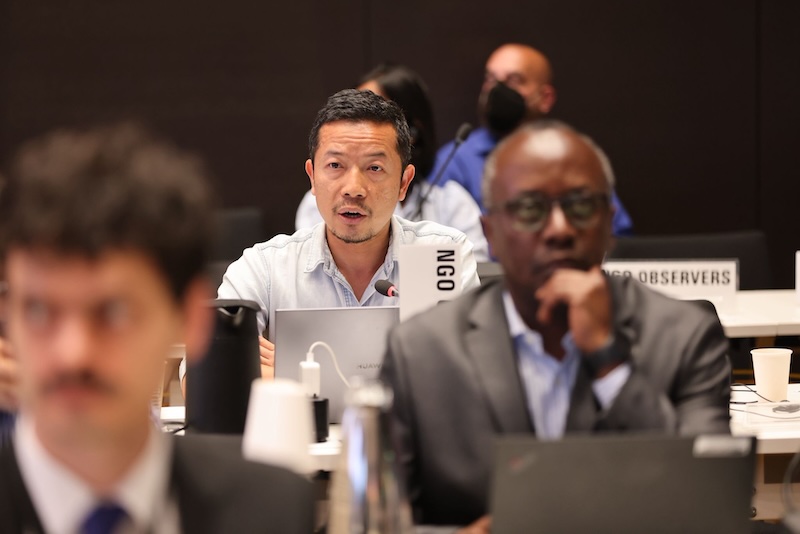
Thank you Madam Chair,
In Asia and the Pacific, APCOM is part of the 7 Alliance, a consortium of seven Asia-Pacific networks focused on HIV/AIDS.
Its other six members include the Asia Pacific Transgender Network (APTN), the International Community of Women Living with HIV (ICWAP), the Asia Pacific Network of People Living with HIV/AIDS (APN+), the Asia Pacific Network of Sex Workers (APNSW), Youth Leadership, Education, Advocacy and Development (YouthLead), and the Network of Asian People who Use Drugs (NAPUD).
These networks work together to promote community leadership and advocate for community-led monitoring as a key component of community responses to HIV/AIDS in the Asia-Pacific region.
We led an online Asia and the Pacific consultation, with the support of UNAIDS Asia Pacific, on Ensuring Community Leadership in the HIV Response as part of the new Global AIDS Strategy 2026-2031 in April attended by nearly 100 participants, that Christine Stegling presented.
The main recommendation is that community-led initiatives stand at the forefront of transforming the HIV response by advocating for supportive legal frameworks that empower KPs and ensure equitable access to care. The consultation affirmed that community-driven approaches are not merely supplementary but central to the success of the Global AIDS Strategy, to establish long-term financing mechanisms and fostering meaningful community engagement across, mental health, sexual reproductive health, and Gender-Based Violence frameworks are crucial steps forward.
In addition, APCOM Regional Community Caucus, composed of community experts representing the key populations across the countries in Asia-Pacific, they recommend for the Global AIDS Strategy to ensure specificities tailored to the HIV epidemic in the region that has to invest in key population-led responses, and calls for political will and rapid scale up of investment into HIV prevention, particularly for pre-exposure prophylaxes, as we are only reaching less than 3% of the target with oral PrEP, and long acting injectable PrEP is currently out of reach for many.
Thank you.
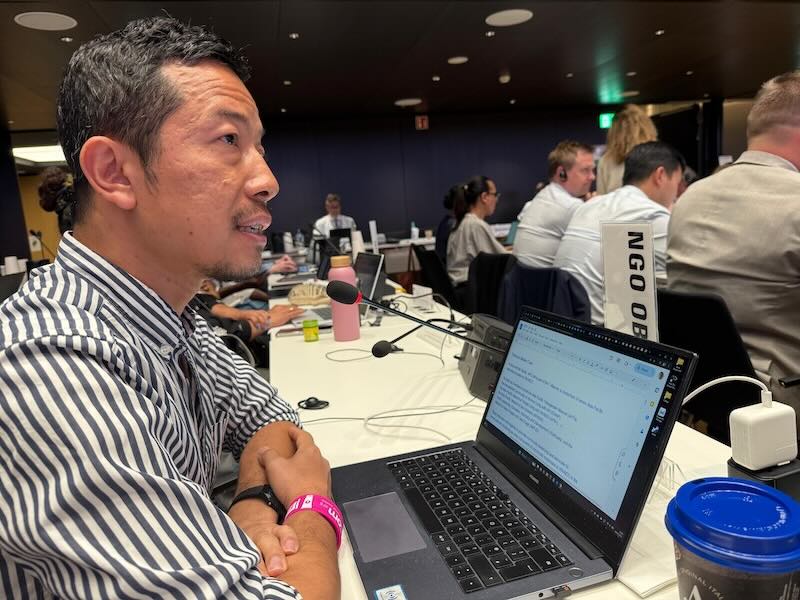
Thank you Madam Chair,
Thank you Mamadi and Erika for the presentation.
Congratulations Erika on a job well done as one of the three co-chairs.
I was honoured to take part in the High Level Panel as the only Panel member from Asia and the Pacific region, and work together with other distinguished Panel members, co-chairs, and co-convenors.
A big thank you to fellow CSO panel members, and also to the NGO Delegation for all your feedback to ensure strong representation and recommendations from CSOs and key populations to this important process.
Asia and the Pacific is a region where HIV is concentrated among key populations, constituting 79% of total new infections, where 6.7 million people are living with HIV, and where punitive laws, stigma and discrimination, and structural barriers remain in place which hinder implementation of effective and sustainable responses.
We need the new Joint Programme to exercise leadership in reinvigorating HIV prevention in the region to safeguard the progress achieved over the past four decades and to prevent the emergence of a new wave of the HIV pandemic. This entails mobilizing financing for prevention which has been historically under-resourced and heavily reliant on external donor support, and addressing recent shifts in political and aid-assistance dynamics to avert serious threats to the continuity of prevention services.
As a civil society member, we are also pleased to see one of our recommendations in the final document to institutionalize engagement of community-led organizations, including people living with HIV, by creating spaces and formalizing processes within UNAIDS at regional and national levels.
I want to thank all the Panel members that support the UNAIDS Joint Programme that continues to champion the centrality of communities through efforts to integrate community-led services into national health and social support systems and establishment of sustainable financial models.
Thank you.