

Connecting Asia 2.0 will bring together communities and partners to expand PrEP access, explore responsible uses of AI and strengthen community-led programming across Asia and the Pacific.


APCOM announces the APCOM Community Summit 2026: Connecting Asia 2.0, to take place on 11-13 November 2026 at Mövenpick Hotel Sukhumvit 15 Bangkok. The 8th APCOM Community Summit will bring together community leaders, policymakers, researchers, development partners and technology practitioners to advance practical innovations that improve health, expand prevention choices and uphold human rights.
The Summit comes at a critical time for the region. According to UNAIDS’ 2025 Global AIDS Update, Asia and the Pacific recorded an estimated 300,000 new HIV infections in 2024, representing a decline of just 17% since 2010. Fewer than 250,000 people in the region took pre-exposure prophylaxis (PrEP) in 2024, highlighting the gap between available prevention tools and the people who could benefit from it. The report also identifies a 50% funding gap against the region’s HIV resource needs for 2030.
Building on APCOM’s previous Connecting Asia meeting which looks at how communities have integrated innovations and technology with their work, and the APCOM’s PrEPARING Asia Community Summit 2025, the 2026 Summit will carry forward discussions on prevention choice, equitable access to long-acting injectable PrEP, sustainable financing and stronger community systems. It will connect this work with a wider agenda for community-led innovation, including digital tools and artificial intelligence.
“Innovation matters when communities can shape it, access it and use it to improve their lives,”
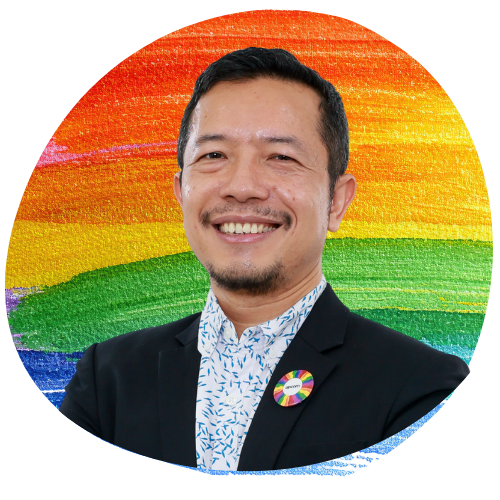
said Midnight Poonkasetwattana, Executive Director of APCOM.
“Whether we are expanding access to long-acting PrEP, strengthening community services or exploring AI, our starting point is the same: people’s needs, choices and rights. This Summit will help turn new possibilities into practical action led by and for communities.”
Expanding access to PrEP will remain a central priority. Participants will examine how to scale up oral PrEP and support the introduction and expansion of long-acting injectable options through affordable, accessible and community-led services. Discussions will address community preferences, demand generation, financing, policy barriers and service readiness.
New prevention options add urgency to this work. In July 2025, WHO recommended twice-yearly injectable lenacapavir as an additional PrEP option, alongside existing choices that include oral PrEP and injectable cabotegravir. The Summit will explore what communities and their partners need to translate scientific advances into equitable access across the region.
Human rights will run throughout the programme, encompassing equality, bodily autonomy, freedom from violence and discrimination, privacy, and the civic space communities need to organise and advocate. Participants will consider how community-led initiatives can strengthen access to health services and advance the rights and well-being of LGBTQI people and other marginalised communities.
AI will be explored as one component of this broader innovation agenda. Practical sessions will examine its potential to support outreach, translation, organisational work, analysis of community feedback and access to credible information. Participants will also assess accuracy, bias, data protection and accountability, and identify where human judgement and trusted peer relationships remain essential.

To help shape the Summit’s AI learning sessions, APCOM’s AI Learning Needs Survey will gather community organisations’ experiences, priorities and questions about artificial intelligence. The findings will inform practical sessions on where AI could support community-led health and human rights initiatives, including PrEP outreach and organisational work, and what skills and safeguards are needed. This will help ensure learning responds to communities’ needs, confidence levels, and concerns about privacy, bias, and accountability.
The programme will centre the experiences of gay men and other men who have sex with men, transgender people, sex workers, people who use drugs, young key populations and people living with HIV. Through shared learning and collaborative planning, participants will identify priorities for community-led initiatives, partnerships and country and regional action.
Connecting Asia 2.0 advances APCOM’s Strategic Plan 2025–2030, RELENTLESS, by bringing community leadership, health innovation and human rights into a shared agenda for action.


Interested to join the conference?
11 – 13 November 2026
Mövenpick Hotel Sukhumvit 15 Bangkok
Please send email to [email protected] for more information.
Further details on programme will be announced through APCOM’s official channels.
See our previous APCOM Community Summits:
2024

2023
2022
2021
2020

2017