
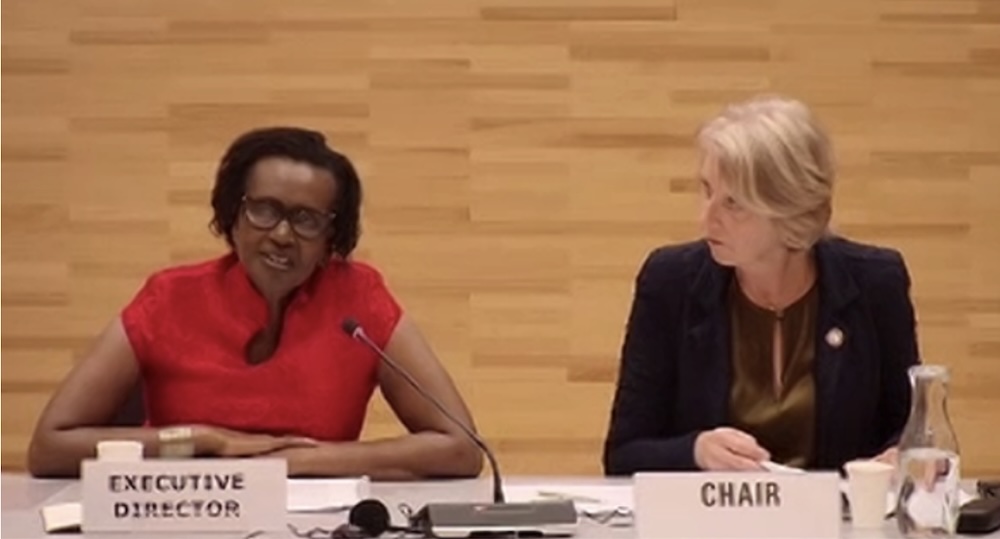
As the discussion on the transition of UNAIDS is underway, APCOM has been highlighting the needs for the region and have made recommendations to the PCB Working Group on the further transition and integration of UNAIDS into the UN system and beyond.


“Strengthening UNAIDS is a public health and human rights imperative for key populations. A stronger UNAIDS means stronger access to HIV services, stronger investment in KP‑led initiatives, and stronger sustainability of KP networks that carry the weight of the epidemic in Asia and the Pacific.” Said Midnight, APCOM Executive Director, he continued,
“A strengthened UNAIDS Joint Programme can expand access, financing, protection, and political visibility for key populations. The region’s ability to end AIDS depends on whether UNAIDS can continue to perform the functions that no other global body is mandated, equipped, or politically positioned to deliver.”
The Asia-Pacific Region is at a pivotal moment in the HIV response. The region continues to face the world’s second largest HIV epidemic, with key populations accounting for 68% of new HIV acquisitions. Several countries in the region are experiencing resurgent HIV infections, rising AIDS related deaths, and widening prevention gaps especially where PrEP coverage remains low and community-led outreach has been disrupted by declining donor support.
Despite more than 40 years of the global HIV response and over 30 years of UNAIDS, the region is not on track to end AIDS as a public health threat. The current UNAIDS transition presents a decisive opportunity to strengthen the Joint Programme’s ability to lead, coordinate, and protect the rights of communities most affected by HIV.
APCOM, regional KP networks, and country-based key population-led organisations hold the opinion that UNAIDS country presence remains indispensable. Without UNAIDS country presence the coordination, CSO engagement, and political will has weakened and national responses have become fragmented, selective, and less accountable.

Regional Realities: Prevention Gaps, Shrinking Civic Space, and Declining Financing
Resurgence of HIV and widening prevention gaps
Asia and the Pacific is experiencing a renewed surge in HIV infections, with several countries reporting rising new cases and high AIDS‑related mortality. Prevention coverage remains dangerously inadequate, particularly for key populations who account for 68% of new HIV acquisitions in the region.
Despite global commitments to scale up combination prevention, oral and injectable PrEP are not reaching scale. Regulatory delays, cost barriers, and the absence of community‑led delivery models continue to block access. Community-led organisations face interruptions in service delivery due to funding disruptions and donor withdrawal. These gaps directly undermine the ability of key populations to access lifesaving HIV prevention tools.
Declining international financing for KP-led programmes
The region is entering a period of decreasing investments and financing. Many Asia-Pacific countries are receiving their final rounds of Global Fund support, while bilateral donors have reduced investments. This trend has resulted to interruptions in community-led outreach, reduced PrEP demand generation, weakened KP-led monitoring, and loss of political visibility for key populations.
For key populations, this is a direct threat. KP-led organisations are the backbone of HIV prevention in the region, yet they remain financially vulnerable, structurally underfunded, and excluded from domestic financing systems. Without sustained investment in KP-led programmes, Asia-Pacific countries will not achieve the 2026 Political Declaration’s prevention targets, nor will they be able to reverse rising epidemics.
Shrinking civic space and criminalisation
Key populations in Asia-Pacific continue to operate in hostile legal and political environments. Yet the 2026 Political Declaration does not name criminalisation of sex work, same-sex relations, drug use, and anti-trans legislation as the core drivers of the epidemic.
Shrinking civic space further undermines access to HIV services. KP-led organisations cannot deliver prevention, PrEP, or harm reduction services effectively when their existence is criminalised or politically constrained.
UNAIDS’ human rights leadership has historically been essential in protecting KP communities in hostile environments. Communities warn that any weakening of this mandate will directly worsen structural barriers, reduce access to services, and increase violence and discrimination.
Weakening coordination without UNAIDS country presence
Across the region, communities consistently report that downsizing or removing UNAIDS country offices has weakened multisectoral coordination, reduced government engagement with civil society, and diminished political commitment to HIV. In several countries, KP-led organisations have lost access to national policy spaces, coordination platforms, and technical dialogues.
When UNAIDS coordination weakens, KP-led organisations lose the only UN-backed mechanism that consistently champions their leadership, rights, and financing needs. Without strong UNAIDS country presence, national HIV responses risk becoming fragmented, selective, and disconnected from community realities.

Strengthening UNAIDS Joint Programme Matters for Asia-Pacific
UNAIDS is the only global body with a singular mandate to end AIDS
UNAIDS remains the only global body with a singular mandate to end AIDS. It is the mechanism that keeps HIV politically visible and prevents national responses from fragmenting or deprioritising communities most affected by the epidemic. Without strong UNAIDS leadership, KP-led priorities risk being overshadowed by broader health agendas, diluted within multisectoral frameworks, or sidelined in national planning processes.
UNAIDS provides accountability mechanisms that communities rely on
UNAIDS’ data systems, reporting frameworks, and target-setting processes are the only global mechanisms that consistently expose inequities in access, financing, and service delivery for KP communities. As communities have warned, without UNAIDS’ independent monitoring, national reporting can become selective, political, or disconnected from community realities, leaving KP-led gaps invisible and unaddressed.
UNAIDS is the only UN body with formal PLHIV and KP representation in governance
This structural safeguard ensures that lived experience, community evidence, and rights-based perspectives shape global policy and resource allocation. Any transition that weakens or sidelines community representation would undermine the legitimacy of the global HIV response and erase the political gains KP networks have fought for over decades.
UNAIDS protects human rights in hostile political environments
UNAIDS is the only UN agency that consistently champions the rights of men who are having sex with men, sex workers, transgender people, people who use drugs, and migrants. Weakening UNAIDS’ human rights mandate would directly reduce KP access to services, increase violence and inequalities, and embolden punitive laws that fuel the epidemic.
UNAIDS’ regional hubs are essential for Asia-Pacific
UNAIDS’ regional hubs play a critical role in Asia-Pacific by tackling human rights violations, championing KP-led interventions, supporting countries facing criminalisation, and coordinating regional advocacy and accountability. They are also essential for ensuring financing for community-led responses, guiding domestic financing transitions, and supporting the scale-up of PrEP and other prevention tools.

Community Recommendations to Strengthen UNAIDS in Asia-Pacific
Strengthen UNAIDS Country Presence and Regional Hubs
UNAIDS’ presence is a requirement for ensuring access to services for key populations. Country offices must be maintained and expanded, especially in settings with rising epidemics or hostile legal environments. Regional hubs must lead human rights advocacy, support KP‑led organisations facing criminalisation, coordinate PrEP scale‑up, and ensure accountability for prevention targets. They must also support domestic financing transitions to ensure KP‑led organisations are not left behind as donor funding recedes.
Institutionalise KP and PLHIV Leadership in Decision-Making
There must be an institutionalisation of formal, resourced, and structured representation of key populations and PLHIV at all levels of decision-making including country coordination mechanisms, regional platforms, Joint Programme governance, and national HIV planning, budgeting, and oversight bodies. This representation must include transgender communities, sex workers, people who use drugs, young key populations, and PLHIV networks.
KP leadership is a programmatic requirement for designing interventions that reach criminalised, underserved, and socially excluded communities. Without KP leadership embedded in governance, national responses will continue to overlook the populations driving the epidemic.
Protect and Expand UNAIDS’ Human Rights Mandate
UNAIDS must continue to champion rights‑based approaches and confront punitive laws and policies. This includes advocating for decriminalisation, protecting transgender rights, and removing administrative barriers that restrict access to HIV prevention and treatment. Rights‑affirming frameworks must be fully resourced to ensure KP‑led organisations have the political space and safety required to deliver services.
Strengthen UNAIDS’ Accountability Role on Financing for KP-Led Interventions and Achievement of the 30 80 60 Targets
UNAIDS must systematically monitor progress, gaps, and barriers in financing for KP‑led interventions. Strengthening the Joint Programme requires clear accountability mechanisms that track national investments, identify financing shortfalls, and support governments to close gaps through domestic prevention budgets, social contracting, and rights‑affirming financing pathways. This accountability must be tied to enforcing the 30‑80‑60 targets to ensure KP‑led service delivery and monitoring.
Strengthen UNAIDS’ Role in PrEP Scale-Up and Prevention Innovation
UNAIDS must support fast‑track regulatory pathways for long‑acting and oral PrEP, advocate for KP‑focused national PrEP targets, and promote community‑led differentiated service delivery models. Regional market‑shaping efforts are needed to reduce PrEP costs and accelerate access. Prevention targets must be monitored through community‑led data systems.
Reinforce UNAIDS’ Convening Power
UNAIDS’ convening power remains irreplaceable in Asia-Pacific, where multisectoral coordination is essential to reaching criminalised and marginalised communities. UNAIDS must continue to bring together governments, communities, donors, UN agencies, and technical partners to sustain political commitment, strengthen regional collaboration, and ensure accountability for prevention and human rights.
This convening role ensures that KP-led organisations retain access to policy spaces, that governments remain accountable, and that regional responses remain coherent and rights-based.
See here for APCOM’s engagement for the 1st Multistakeholder Consultation of the PCB Working Group on the Further Transition and Integration of UNAIDS into the UN System and Beyond: