
Find out more about the honouree
Honouree:
HIV Hero
Supported by:

Kairon Liu
Taiwan

I am the youngest child in a family of four. My parents have never truly embraced my sexuality, and our home was often filled with tension, sometimes between them and sometimes toward us. My father, who worked in construction, stopped working when I was ten and often took his anger out on us with violence. My mother became the sole provider. By fifteen, my sister and I had already started working to support ourselves. I was forced out of home five times because of who I am. Two years ago, I finally moved out for good to reclaim safety and the right to live as myself. I now live only two blocks away, maintaining a sense of connection and responsibility while continuing to search for who I truly am.
Art has always been my way of survival. From childhood drawing to studying graphic design and photography, I have constantly sought balance between making a living and creating meaning. The diagnosis of HIV shifted my path toward art and community work, revealing how creation can heal and connect.
These experiences shaped my understanding of care, resilience, and balance. My purpose is to find and create a family where I can feel safe and at peace, while never giving up on speaking my truth.
I am a visual artist, curator, photographer, and activist whose work explores the intersection of illness, identity, and collective memory. My artistic and curatorial practice focuses on HIV-related narratives, challenging stigma and reimagining how care and visibility can exist within cultural contexts that often remain cautious toward difference.
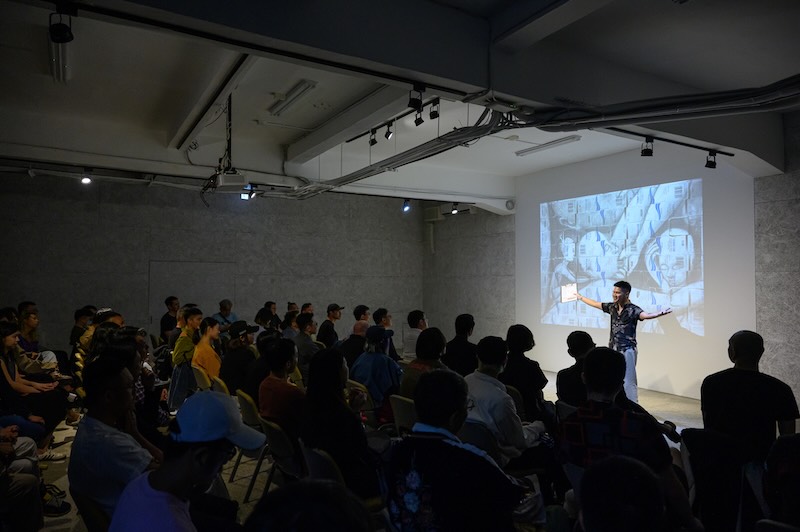
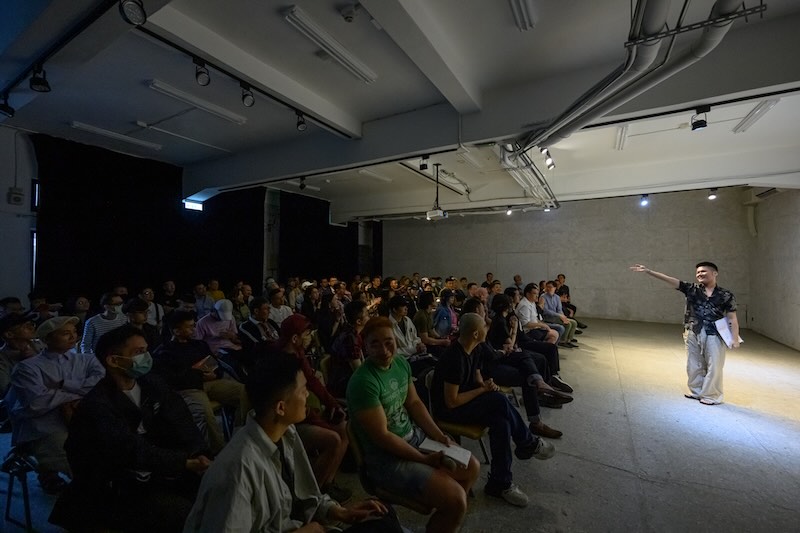
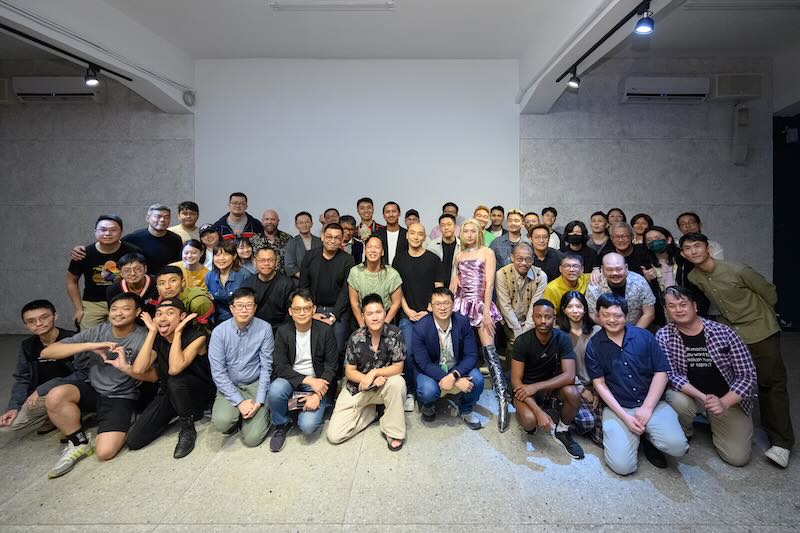
My personal HIV-related visual artworks have been exhibited in Brisbane, Springfield, New York City, Washington D.C., Taipei, Kaohsiung, and Tainan. In 2019, I curated the first international HIV/AIDS group exhibition in Taiwan at MoCA Taipei, determined to connect visual art with the politics of health and visibility. That same year, I joined the Taiwan HIV Story Association, an NGO that publishes stories of people living with HIV and fosters community empowerment. When I joined, it was run solely by its founder, Wei-Chih Chen, with help from a few volunteers. To this day, the organization continues to be operated by the two of us, supported by volunteers. Our art empowerment programs, performances, and exhibitions are mainly based in Taiwan, with occasional collaborations internationally.
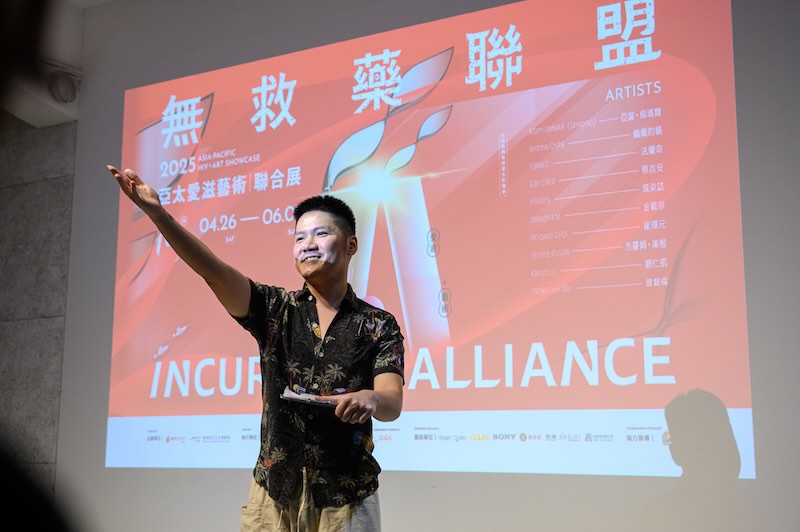
Our projects Interminable Prescriptions for the Plague, Rx: still life, POZ Movement, and Incurable Alliance bring together people living with HIV from different regions to reclaim visibility and solidarity through creative expression.
What one achievement you’ve accomplished that you’re most proud of?
Why?
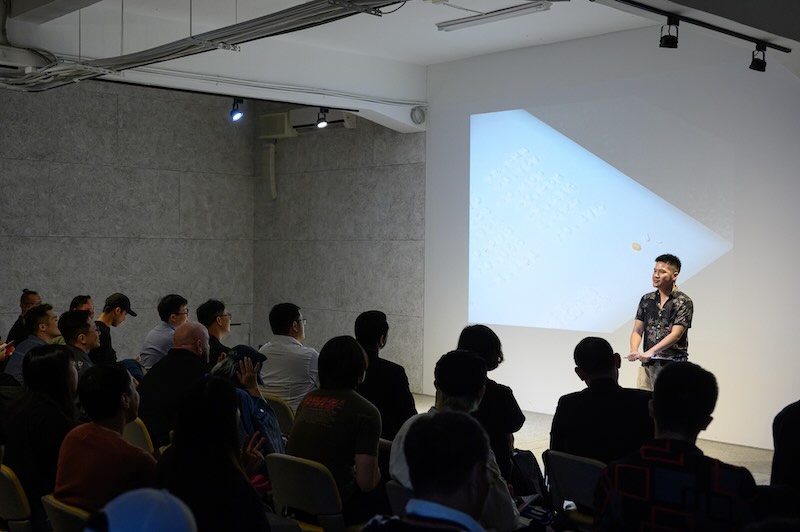
The 2019 exhibition Interminable Prescriptions for the Plague at MoCA Taipei. It started from an invitation to create a solo show about HIV. When I realized it would become Taiwan’s first museum exhibition on the subject, I turned it into an international group show featuring 22 artists, 17 works, and more than 14,000 visitors. Although I am still paying off the loan that remained after the project, I am proud that it sparked a new wave of HIV-related art and therapy programs across hospitals, NGOs, and community groups in Taiwan, proving that art can be a powerful form of collective healing.
What do you find most challenging about your work?
Why?
Working within limited budgets while still striving for the best outcomes is the most challenging part of my work. All our public programs, including art workshops, exhibitions, and performances, are free so the community can learn and create without financial barriers. Most of our funding comes from small individual donations, corporate gifts, or occasional arts and human rights grants. With only two full-time staff members, every project involves creating while fundraising, providing a safe space where participants can express themselves at their own pace, and balancing the expectations of supporters, audiences, and public institutions where we present our work.
What do you do to recharge your battery?
Like many others, I travel, sleep, play video games, drink, or take quiet walks in nature. Sometimes I just need to disappear for a while and not be “Kairon Liu.” Our work can be exhausting, and there are times when I seek pause in ways that are simply human. Over time, I’ve learned it’s less about escaping exhaustion and more about finding meaning within it. When I can, I let silence hold me and listen for the air’s quiet voice. That sense of comfort and peace reminds me I’m here, I am living.
What is your vulnerability and how do you overcome it?
My greatest vulnerability is the feeling of losing myself in what I do. In this work, strength often becomes the role I’m placed in, and that image sometimes overshadows the person underneath. There are days when I feel empty, when I keep giving even after I feel a sense of hollowness. I am often drawn to where I am needed, and sometimes I push myself there even when I wish someone else could. I’ve learned to live with that by letting it soften me instead of harden me. It’s okay to feel hurt even when holding the torch. That, too, is love.
You have been nominated for the HIV Hero category. What was your reaction and please, tell us why?
When I first heard about the nomination, I felt both grateful and conflicted. It came at a time when I was exhausted, wondering if I had been too impulsive in these movements and whether I had done enough to care for my own wellbeing. I also questioned if I was truly ready to be seen as a “hero,” when I am still learning how to balance doing meaningful work without burning out, how to sustain instead of survive. A friend reminded me on the day of the deadline that it is okay to still be becoming, and to keep finding my own rhythm of living.
With changes that we are currently experiencing politically affecting our movement, and sustainability, what is a warm/hopeful message that you would like to share with the communities in the Asia Pacific?
We continue because we still have each other, because we witness one another’s pain and presence. It saddens me to see how recent political shifts have created harm, even in Taiwan. When authority cannot help or is unable to respond, it becomes our job to keep what we have built on track and to let others see that the need is here and now.
At every turning point in history, we learn to rely on one another. The key, I believe, is visibility, to join our peers when we are ready. Hope lives in these small places where people choose to care for one another and keep believing in a better, safer world for us all.
Anything else you would like to share?
It came to me on one of my darkest days that I really don’t want to give up on the potential of making things better.
I hope to encounter more light while learning to be more accountable to myself.
I hope loneliness will stop swallowing another.
I hope more people join, and more people help.
And I hope, together, the road ahead will grow faster and brighter for us all — for those who walked before us, among us, and come after.