
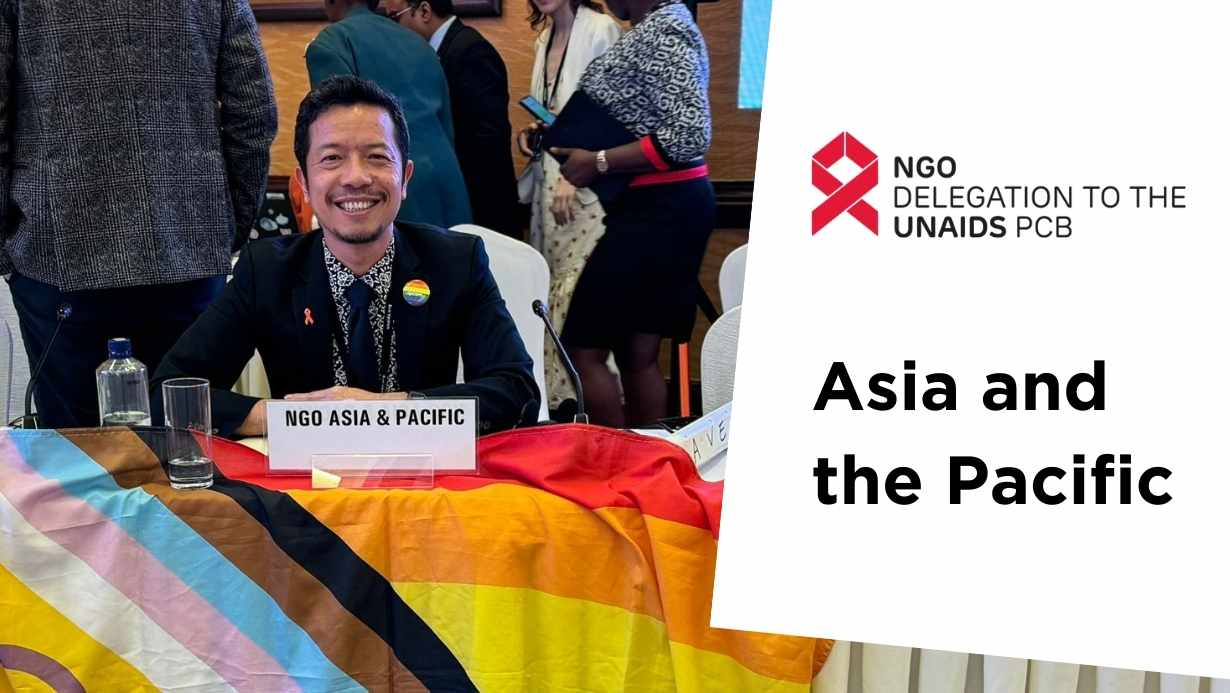
Representatives of ten NGOs form the NGO Delegation, representing five UN regions (Africa, Asia and the Pacific, Europe, Latin America and the Caribbean, and North America). The NGO Delegation represents civil society on the PCB, the governing body of UNAIDS, and is critical for effectively including community voices in the key global policy forum for HIV/AIDS. The NGO Delegation has participated in all PCB meetings since 1996, bringing expertise, lived experience, and collective wisdom generated from its internal discussions and outreach with constituencies.
APCOM, represented by Midnight, the Executive Director started on the UNAIDS PCB representing Asia and the Pacific in 2022, and completed the three year term in December 2024
We caught up with him to discuss his experience on this important platform.

What were some of the highlights for you being part of the UNAIDS PCB NGO delegation?
First of all, I can’t believe three years have passed by so fast, and I am just getting the hang of the UNAIDS Programme Coordinating Board. It was a steep learning curve to operate at the global level, and on the board with member states of UNAIDS which is rather exciting.
Where do I start, as there were so many highlights for me, I’ll just list some of them in no particular order:
In 2022 when Thailand was the chair of the UNAIDS PCB in December, and it was hosted in Chiang Mai. As a Thai citizen, we were able to coordinate with 12 Thai CSOs to demand political leadership for sustainability of key population-led HIV services:
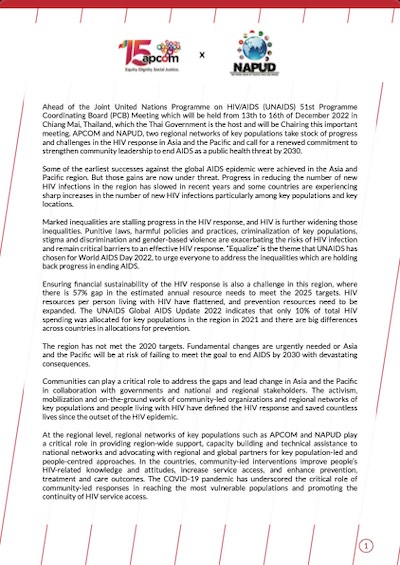
Ahead of the 51st PCB, the APCOM and NAPUD draw the attention of Member States and stakeholders on critical actions to be prioritized to advance the HIV response in Asia and the Pacific and strengthen the leadership of communities at the regional and country levels to enable them to play a critical role to leave no one behind, and importantly that the Joint United Nations Programme on HIV/AIDS (UNAIDS) must be sufficiently resourced.
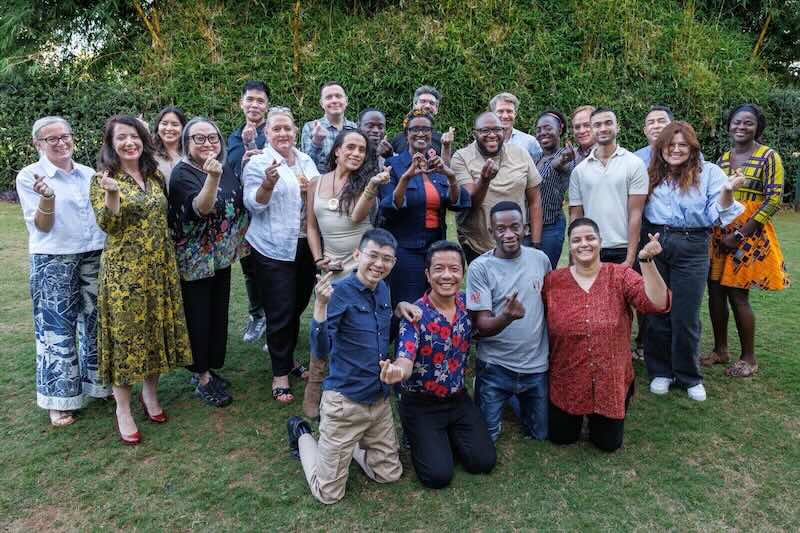
Another highlight for me is our collective NGO Delegation’s work on one of the Thematic Segments in the 52nd PCB – Priority and key populations especially transgender people, and the path to 2025 targets: Reducing health inequities through tailored and systemic responses.
The Thematic Segment provides an opportunity for the PCB to discuss the inequalities that are preventing progress in the HIV response for key populations, especially transgender people, and how the HIV response can more effectively reduce the risk and impacts of HIV among these populations.
This is significant, as it is the first time a member state-led UN body has adopted a consensus decision that includes specific references and commitments to transgender people and actions to be taken by member states. It brought tears to the NGO Delegates.
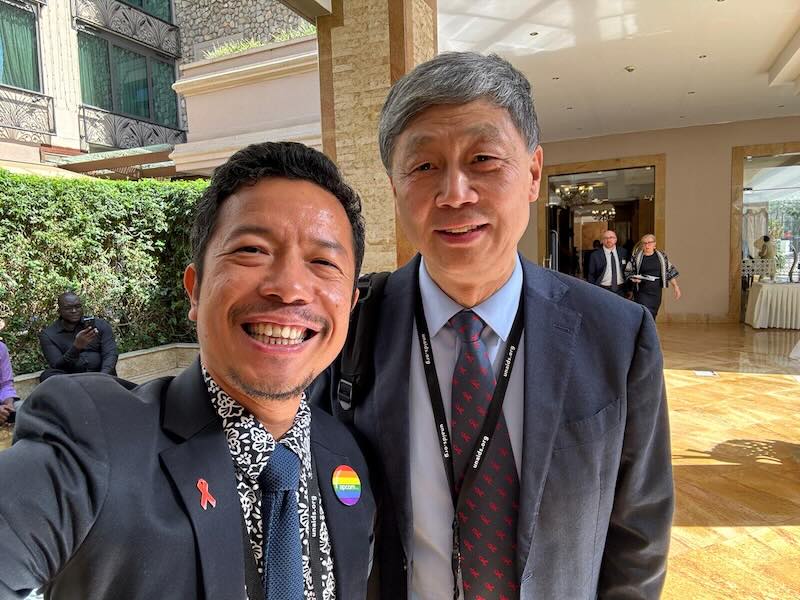
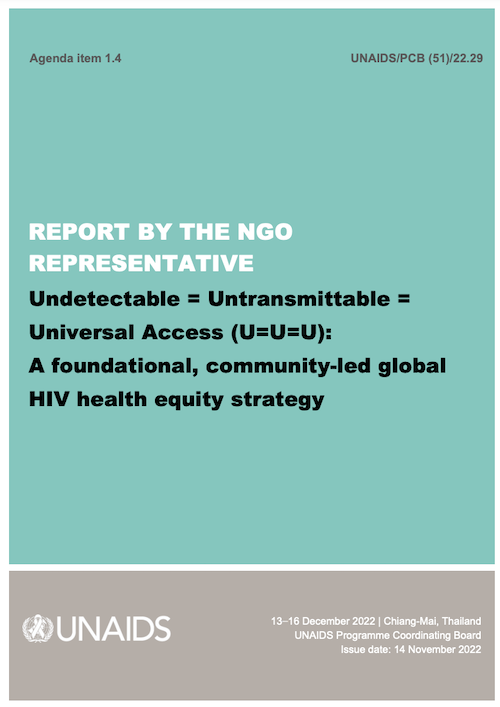
This annual report by the NGO Delegation to the UNAIDS’s Programme Coordinating Board focuses on the untapped potential of U=U as a vital community-led, global HIV health equity strategy. It describes how U=U can improve the health and quality of life of people living with HIV, key populations and other vulnerable groups1, and it underscores the fundamental role U=U can play in achieving the 95–95–95 treatment targets and in ending AIDS by 2030.
What were some of the challenges of the UNAIDS PCB NGO delegation?
The UNAIDS PCB is a political space, so it is a challenging space as the NGO Delegation, though we can’t vote, we do have a seat at the table and are able to make interventions. In this space, I find negotiating language in the drafting room rather challenging as you quickly learn that not all Member States support what the NGO Delegation puts forward in terms of progressive language. However, this is an important space for us to push for progressive language.
Another challenge for the NGO Delegation is that we rotating in and out, and it means a lot of turnover which means new delegations have to learn to work with each other, and build trust all the time, and also have to hit the ground running – whereas other members of the board tend to be the same person. So this can add pressure to perform.
My main challenge is the time difference, as you need to be able to prioritise and dedicate time to engage with the NGO delegation – and it means a lot of online calls which take place in the evenings Thailand time.
Do you have any tips for someone who is thinking of joining the UNAIDS PCB representing Asia and the Pacific?
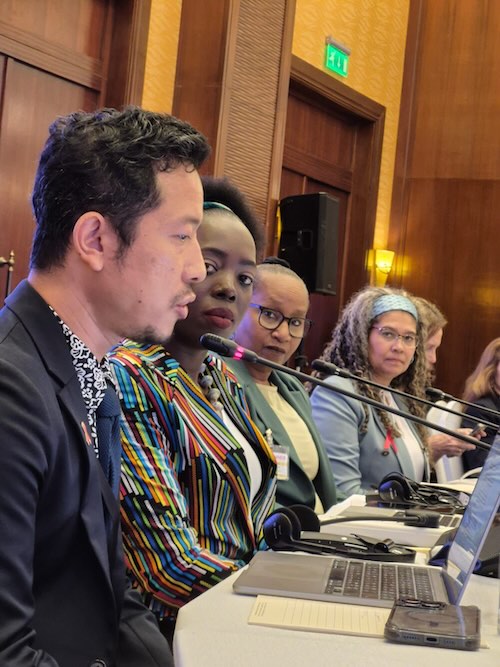
The UNAIDS PCB is the only UN space that has NGOs on its board, and not just an observer.
What we say, and do has the potential to impact the global AIDS response.
This is a great space for learning about global advocacy, multi-lateral space, and diplomacy – if these are the areas that you excel at then this is a great platform. If you’re a good communicator and networker, this is a great space for you too.
What are the opportunities for the Asia Pacific NGO delegations to take forward for our region?
Asia and the Pacific needs to all the time be highlighted, as it can easily be forgotten when it comes to HIV/AIDS. So there are a lot of opportunities to highlight issues from our region in meetings and in the more formal interventions.
The up-coming years will be critical for our region as:
- Mid-term review of UNAIDS
- New Global AIDS Strategy is being developed
- New operating model of UNAIDS is being discussed
For our region, there’s so much to be done. In 2022 in Asia and the Pacific, HIV is concentrated among key populations and their partners with 79% of new HIV infections among key populations and their partners – most of which was amongst men who have sex with men (43%). There are emerging risks associated with chemsex among men who have sex with men and transgender people in the region that needs attention. The region is sadly lagging behind prevention targets so we need to re-energize and make use of innovations and advances in HIV prevention – we are only reaching 150,000 PrEP users in 2022 when the target is 8.2 million, we’re only reaching 2%!
I hope our Asia and the Pacific representatives on the NGO Delegation will be able to continue the advocacy for the region.