
At the recent 53rd PCB meeting in December 2023, the NGO Delegation urged the PCB members to step up in the political will and investment to truly Let Communities Lead so that by 2025, communities will deliver the 30-80-60 targets.
In 2024, a mid-term review of the current Global AIDS Strategy (2021-2026) will be conducted, as well as the consultative process to develop the next Global AIDS Strategy and 2030 HIV targets (2027-2031), and we’re only 7 years away from 2030 and need to deepen our commitments from governments, civil society, and UN agencies to get on track and reach agreed targets.
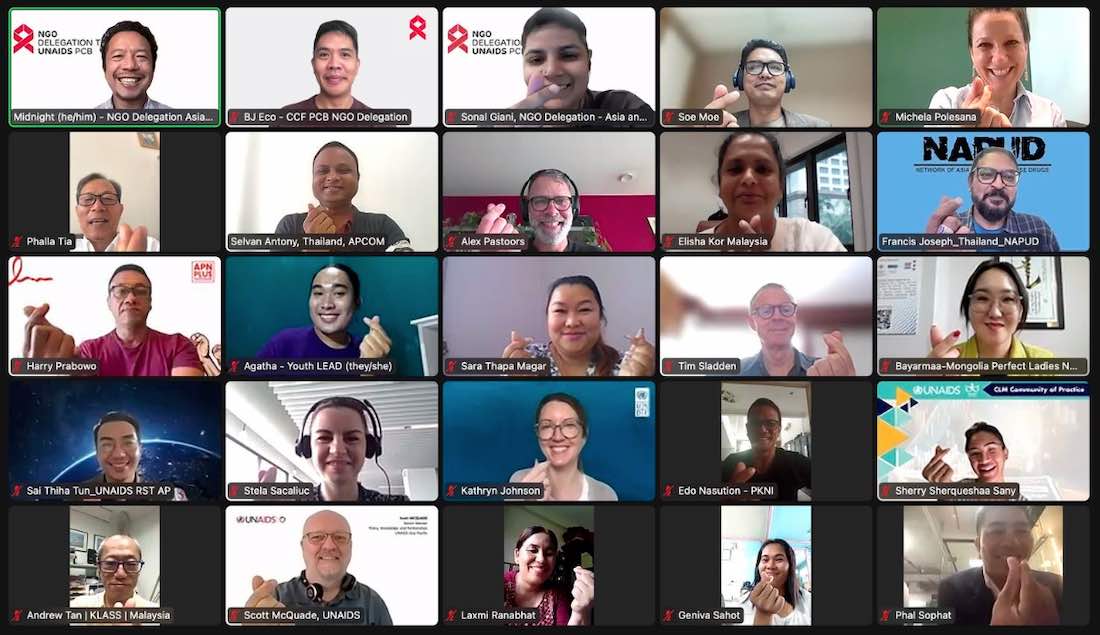
In preparation for the 54th PCB meeting in June 2024, the Asia and the Pacific NGO Delegation in partnership with UNAIDS Asia and the Pacific conducted a webinar to garner key population and people living with HIV, NGOs, CBOs to provide inputs into the up-coming meeting in order to support visibility of the region, where the absolute number of people living with HIV was high at more than 2.2 million in reporting countries and territories in 2021, because of Asia-Pacific’s large population. Participants provided inputs into:
- Thematic segment on “Sustaining the gains of the global HIV response to 2030 and beyond”
- Issues that civil society are facing on the community-led response to HIV/AIDS in their setting
Thank you very much to all partners from the community at country level, to the regional key population networks representing the 7 Alliance, UNAIDS Regional Support Team Asia-Pacific, National AIDS Authority of Cambodia, UNDP Bangkok Regional Hub, and UNAIDS NGO Delegation’s Communication and Consultation Facility for making this important happen.
Here’s a summary of the webinar:
Dr Tia Phalla (Vice-chair, National AIDS Authority, Cambodia) gave a keynote address and enforced the message of working with key populations, and Eamonn Murphy (UNAIDS Regional Director Asia Pacific, Eastern Europe and Central Asia) gave an update on the HIV epidemic in the region.
Representing the key population networks, Francis Joseph, Regional Coordinator, Network of Asian People who Use Drugs (NAPUD) talked about the regional networks coming together to form the 7 Alliance working on CLM and also hosting the Global Fund Learning Hub for the region, as well as highlighting funding gaps in harm reduction programmes and for people who use drugs.
Notes from the three breakouts:
Group 1:
Facilitated by: Agatha Syailendra (Youth-LEAD)
Report back by: Soe Moe Aung (APNSW)
Group One’s discussion revolved around two main questions:
- What do we need to sustain in our HIV/AIDS response, and why?
- Can we end AIDS by 2030, and what do we need to do beyond 2030?
The group’s focus was on identifying critical areas for sustaining efforts in HIV/AIDS response, emphasizing resource sharing, political commitment, youth involvement, and evidence-based advocacy. The group also discussed the challenges and doubts about achieving the goal of ending AIDS by 2030.
Question 1: What Do We Need to Sustain, and Why?
Key Areas for Sustaining HIV/AIDS Efforts
- Resource Sharing and Development:
- Importance of Resources: Resource sharing and development are crucial for sustaining progress in HIV/AIDS responses. Sharing resources helps maximize impact and ensure efficient use of available assets.
- Political Commitment and Resource Mobilization: Advocacy is essential for securing political commitment and mobilizing resources. Strong political support is needed to maintain momentum and prioritize HIV/AIDS on the policy agenda.
- Youth Involvement:
- Youth Engagement: Strengthening youth involvement in HIV responses is vital at both regional and country levels. Youth can bring fresh perspectives and innovative solutions to HIV challenges.
- Youth-Led Initiatives: Empowering young people to lead initiatives can foster a new generation of advocates and leaders in the fight against HIV/AIDS.
- Civil Society Involvement:
- Collaboration with Civil Society: Involvement of civil society organizations (CSOs) and collaboration across sectors is key to sustaining efforts. CSOs play a critical role in reaching communities and delivering grassroots interventions.
- Community-Led Monitoring (CLM): Evidence-based advocacy through Community-Led Monitoring is essential for tracking the effectiveness of HIV/AIDS responses at both national and grassroots levels.
- Advocacy and Evidence-Based Practices:
- Strengthening Advocacy: Continuous advocacy efforts are necessary to ensure that HIV/AIDS remains a priority for governments and stakeholders.
- Monitoring and Evaluation: Evidence-based practices and monitoring HIV/AIDS responses help to adapt strategies and ensure accountability.
Question 2: Can We End AIDS by 2030, and What Do We Need to Do Beyond 2030?
Challenges and Considerations
- Key Populations Left Behind:
- Marginalized Groups: Many key populations, including young people and marginalized groups, are left behind in HIV/AIDS responses. This gap is evident in program implementation and decision-making processes.
- Inclusive Decision-Making: Greater involvement of key populations in decision-making is necessary to ensure programs are relevant and effective.
- Resource Limitations:
- Resource Gaps: There is a significant lack of resources needed to achieve the goal of ending AIDS by 2030. This was highlighted in Emon Murphy’s presentation, emphasizing the need for increased investment, particularly in prevention efforts.
- Funding and Support: Sustained funding and strategic resource allocation are required to fill existing gaps and strengthen the overall response.
- Quality of Life for People Living with HIV:
- Improving Quality of Life: Beyond merely extending life expectancy, improving the quality of life for people living with HIV is crucial. This includes addressing social determinants of health and ensuring comprehensive care.
- Long-Term Support: Long-term support structures need to be developed to ensure people living with HIV have access to necessary services and support networks.
- Doubts About Achieving the 2030 Goal:
- Uncertainty of Success: There is a general lack of confidence in meeting the target of ending AIDS by 2030. The group expressed concerns about whether the current pace and strategies are sufficient to reach this ambitious goal.
- Need for Strategic Planning: A clear, strategic plan is needed to address the gaps and challenges identified, ensuring that efforts continue beyond 2030.
Conclusion
Group One’s discussion highlighted several key areas for sustaining HIV/AIDS responses and emphasized the challenges faced in achieving the goal of ending AIDS by 2030. Key points include:
- Resource Sharing and Mobilization: Sharing and mobilizing resources are crucial for sustaining progress and ensuring effective advocacy.
- Youth and Civil Society Involvement: Engaging youth and civil society organizations is essential for innovative solutions and grassroots impact.
- Evidence-Based Advocacy: Monitoring and evidence-based practices are vital for adapting strategies and maintaining accountability.
- Challenges in Achieving 2030 Goals: There is uncertainty about ending AIDS by 2030, and additional efforts are needed to address resource gaps and improve the quality of life for people living with HIV.
The group stressed the importance of continued advocacy, strategic resource allocation, and inclusive involvement of marginalized populations to make meaningful progress in the fight against HIV/AIDS.
Group 2:
Facilitated by: Harry Probowo (APN+)
Report back by: Sai Tun (UNAIDS)
Group Two’s discussion focused on three main areas:
- Community Leadership in HIV Responses
- Enhancing Civic Society Space
- The Right to Health
The emphasis was on the role of community leadership in HIV responses, the constraints faced by community organizations due to reduced funding, and the need for greater inclusivity and support for marginalized populations such as migrant workers and people with disabilities.
Community Leadership in HIV Responses
Importance of Community Leadership
- Capacity Building: The group stressed the importance of building the capacity of community leaders to respond creatively to HIV challenges. This involves training and supporting them to be effective advocates for change.
- Collaborative Support: It’s vital to support community efforts in a way that prioritizes their needs and perspectives. This includes aligning their messages with what they want to convey to higher authorities to drive policy changes.
- Advocacy and Messaging: Clear and prioritized messages need to be crafted for communication with authorities to enact change.
Funding Constraints
- Reduced Funding: There has been a noticeable reduction in funding support for community organizations. This financial constraint affects their ability to deliver effective HIV programs and advocacy.
- Compensation and HR Challenges: Adequate compensation for community workers is necessary to prevent human resource constraints. Ensuring that those working in HIV responses are fairly compensated can help maintain a stable workforce.
Engagement with Government
- Government Collaboration: There is a need for community groups to express their willingness to work alongside governments. Building a cooperative relationship can enhance the effectiveness of advocacy efforts.
- Indonesia’s Experience: The discussion highlighted the importance of expressing support for governmental efforts, as seen in Indonesia, to ensure that advocacy messages are considered seriously.
Enhancing Civic Society Space
Collective Mobilization
- Unified Efforts: The key population communities need to come together to mobilize authorities effectively. Collective efforts are more impactful than individual engagements in advocating for change.
- Intersectionality: There is a need for intersectional approaches, ensuring that efforts are inclusive and consider various marginalized groups.
Right to Health
- Access Limitations: Despite recognizing the right to health, practical limitations exist for individuals like migrant workers and state-led individuals who face barriers in accessing healthcare services.
- Advocacy for Inclusion: Governments need to be mobilized to ensure these populations are included in health rights discussions and initiatives.
- Focus on Disabilities: People with disabilities must be involved in advocacy and decision-making processes to address their unique health needs effectively.
Challenges Highlighted in Group Discussions
Specific Challenges Faced by CSOs
- Funding Focus: Many civil society organizations (CSOs) face challenges due to funding primarily targeting prevention and treatment, often neglecting the retention of individuals in long-term care. Sustainable support requires investment in ongoing treatment adherence.
- Communication Gaps: In Indonesia, there’s a lack of communication regarding health services for drug user communities. These communities face significant barriers, including stigma and isolation from program design, impacting their access to health services.
- Inclusion in Programs: Drug user communities are often excluded from Community-Led Monitoring (CLM) programs, both locally and regionally.
Representation and Leadership
- Women’s Representation: There’s insufficient representation of women who use drugs, especially in leadership roles. This is due to cultural perceptions of women as caregivers, limiting their participation in support groups and empowerment initiatives.
- Security Concerns: Security issues pose a significant challenge for communities, affecting the rollout of programs like PrEP (Pre-exposure Prophylaxis) as it should be.
Sustainability and Funding
- Sustainability Challenges: Sustainability is a long-term challenge faced at both the country and regional levels. More funding tends to go towards administrative support rather than programmatic needs.
- Shift to Domestic Funding: There’s a need for a shift towards domestic funding sources to ensure long-term sustainability.
- Program Focus: Many countries lack sufficient programs addressing LGBTQI issues. There’s a call for increased focus on this community to address their unique challenges.
Access and Resource Allocation
- Access to Decision-Makers: Key populations face difficulties in accessing decision-makers and financial resources, which hampers sustainability.
- Donor-Driven Activities: Some CSOs tailor their activities to meet donor preferences rather than addressing community needs comprehensively. This project-to-project approach undermines strategic, long-term planning.
- Staffing and Skills: Due to funding issues, many CSOs rely on volunteers instead of highly skilled staff, affecting their operational sustainability and effectiveness.
Conclusion
The discussion by Group Two highlights significant challenges faced by community organizations in the Asia-Pacific region. Key points include:
- Sustainability Issues: Declining funding and concentrated resources on specific projects that may not align with community needs.
- Capacity Development: The need for empowerment and leadership development among underrepresented groups, particularly women and drug user communities.
- Inclusivity in Programming: Ensuring that marginalized groups, such as migrant workers and people with disabilities, are included in health rights advocacy and programming.
These discussions underscore the need for strategic planning, inclusive approaches, and sustained advocacy to address the evolving challenges in HIV responses and civic engagement in the region.
Group 3:
Facilitated by: Selvan Anthony (APCOM)
Report back by: Selvan Anthony (APCOM)
Group 3 engaged in a vibrant discussion about the primary challenges faced by civil society organizations (CSOs) in the Asia-Pacific region. The discussion revolved around three main areas: funding, engagement, and capacity strengthening and empowerment. The group highlighted several specific issues and provided insights into the barriers that impede effective HIV/AIDS responses in the region.
Key Challenges Faced by CSOs in the Asia-Pacific Region
- Funding Constraints:
- Dependence on Global Funding: Most funding for HIV/AIDS responses comes from the global fund, with a significant focus on prevention and treatment. However, there is a lack of investment in retaining individuals in long-term treatment.
- Need for Domestic Funding: There is a call for a shift towards domestic funding to ensure sustainability and reduce reliance on international donors. This could provide more stable and long-term financial support for CSOs.
- Administrative Overheads: A disproportionate amount of funding is allocated to administrative support for CSOs, NGOs, and CBOs, reducing the funds available for direct program implementation and support services.
- Engagement and Representation:
- Marginalization of Key Populations: Key populations, such as drug user communities and women who use drugs, face significant challenges in accessing health services. They are often isolated in program design and face stigma and discrimination.
- Underrepresentation of Women Who Use Drugs: Women who use drugs are underrepresented in decision-making processes and leadership roles within networks, particularly in South Asia. This lack of representation limits their ability to influence policy and program design.
- Challenges for LGBTQI Communities: There is a need for more programs focused on LGBTQI issues. The lack of tailored interventions means that this community’s specific needs are often unmet.
- Capacity Strengthening and Empowerment:
- Lack of Empowerment for Women: In some countries, such as Malaysia, women are often seen as caregivers and face barriers to participating in support group meetings. This affects their empowerment and limits opportunities for capacity strengthening and building.
- Security Concerns: Security is a significant concern for CSOs, especially those working with marginalized and vulnerable communities. This can hinder the implementation of HIV/AIDS programs and outreach efforts.
- Capacity Building for CSOs: There is a need for stronger capacity-building efforts to empower CSOs and their staff. Many organizations operate on a project-to-project basis, lacking a comprehensive strategy for long-term impact.
- Sustainability Challenges:
- Volunteer-Driven Organizations: Due to funding issues, many CSOs rely heavily on volunteers rather than highly skilled staff. This affects the sustainability and effectiveness of their operations.
- Tailoring Activities to Donor Preferences: Some CSOs feel compelled to tailor their activities according to donor preferences rather than addressing the actual needs of the communities they serve. This project-based approach undermines the development of cohesive, long-term strategies.
- Communication and Advocacy:
- Lack of Communication with Drug User Communities: In Indonesia, there is a lack of communication about health-seeking services for drug user communities. This isolation exacerbates their vulnerability and limits access to necessary health services.
- Challenges in Advocacy: Key populations face difficulties in accessing decision-makers and advocating for their needs. This lack of access limits their ability to influence policies and secure the resources needed for sustainable HIV/AIDS responses.
Conclusion
Group Three’s discussion highlighted several critical challenges that civil society organizations face in the Asia-Pacific region regarding HIV/AIDS responses. The key takeaways include:
- Funding Challenges: The need for increased investment in long-term treatment retention and a shift towards domestic funding to ensure sustainability.
- Engagement and Representation: Addressing the marginalization of key populations, enhancing representation of women who use drugs, and increasing focus on LGBTQI issues.
- Capacity Building: Strengthening capacity-building efforts for CSOs to empower staff and promote long-term strategies rather than short-term, project-based approaches.
- Sustainability Concerns: Reducing reliance on volunteers and ensuring that activities are driven by community needs rather than donor preferences.
- Advocacy and Communication: Improving communication with drug user communities and enhancing advocacy efforts to better engage with decision-makers.
The group emphasized the importance of addressing these challenges to build a more sustainable and effective HIV/AIDS response in the Asia-Pacific region.
Sara Thapa representing ICWAP reflected on the session focused on three main things 1) advocate for putting people in the center which also means sustainability 2) leadership – also want to focus on youth empowerment and leadership, 3) meaningful engagement of the community at all levels from the country and the regional. Sara also focused on the quality of lives of people living with HIV.
Representing Cosponsor, Kathryn Johnson, UNDP’s Policy Specialist HIV and Health Group at the Bangkok Regional Hub shared her reflection on the session, and commended the leadership and commitment to combating and addressing stigma and discrimination, and it was encouraging to hear opportunities to further work together across different for multi sectoral and intersectional approach as noting can be achieve in isolation. As part of the work within the UNAIDS programme UNDP is seeking to create an ecosystem to strengthen key population-led efforts for law and policy and practices to get to the 10-10-10 targets, and she mentioned about UNDP’s SCALE project supported by PEPFAR.
Agenda
| Time | Title | Lead |
| 11:00 – 11:05(5 mins) | Welcome and Introduction | Sonal Giani Asia and the Pacific NGO Delegation |
| 11:05 – 11:20(15 mins) | Keynote speech | Cambodia Government Representative Dr Tia PhallaVice-chair National AIDS Authority Cambodia |
| 11:20 – 11:40 (20 mins) | Where are we in the HIV response in Asia and the Pacific | Eamonn MurphyRegional Director Asia Pacific, Eastern Europe and Central Asia UNAIDS |
| 11:40 – 11:55(15 mins) | How is the community of key population and people living with HIV involved in the response? | Francis JosephRegional CoordinatorNetwork of Asian People who Use Drugs (NAPUD) |
| 11:55 – 12:00(5 mins) | Health break | |
| 12:00 – 12:20 (20 mins) | Breakout into three groups: Group 1 – Sustaining the gains of the global HIV response to 2030 and beyond Group 2 – Community Leadership, Civic Space, Human Rights and the HIV Response Group 3 – challenges CSOs in Asia Pacific are facing | Group 1 Facilitator Agatha Syailendra – Youth LEAD Group 2 FacilitatorHarry Probowo – APN+ Group 3 FacilitatorSelvan Anthony – APCOM |
| 12:20 – 12:35(15 mins) | Report back from group and discussion by assigned rapporteurs | |
| 12:35 – 12:45(10 mins) | Reflections – Community | Sara ThapaICWAP |
| 12:45 – 12:55 (10 mins) | Reflections – UNAIDS Cosponsor | Kathryn JohnsonPolicy SpecialistHIV and Health GroupBangkok Regional HubUNDP |
| 12:55 – 13:00(5 mins) | Words of Thanks, Photos and Close | Midnight PoonkasetwattanaAsia and the Pacific NGO Delegation |