
APCOM advocacy for PrEP started in 2013 with the engagement with the WHO guidelines which was launched in 2014 which recommended PrEP for men who have sex with men.
These are some of the selective initiatives we did since then that we would like to highlight:
PrEPARING Asia 2015. In September 2015, APCOM organised the first community-led PrEP consultation in the world, a regional consultation on PrEP roll-out. During 3 days, MSM and other stakeholders explored a range of concerns and issues. Following the consultation, APCOM supported national partners in working with policymakers, service providers and development partners on national-level rollout plans and dialogues.

PrEP Demand Generation. In the creation of campaigns on various social media platforms, testBKK targets specific areas and demographics of Thailand where they are at a higher risk of acquiring HIV. Specifically, young gay men and chemsex users. PrEP promotions have been the core of TestBKK’s work, with campaigns reaching many first-time PrEP users in Thailand. From social media promotion, testBKK also provides a hub of information on its website where it promotes PrEP as a combination prevention, as well as promoting condom use, PEP, information on STIs and also Chemsex.

Get. PrEP. Done. Regional PrEP Demand Generation Toolkit. This resource guide is developed for community organisations looking to use online strategies to generate demand for Pre-Exposure Prophylaxis (PrEP) among their communities. Get. PrEP. Done. was created with technical support from the World Health Organisation (WHO) and the Joint United Nations Programme on HIV/AIDS (UNAIDS). This toolkit aims to support community organizations to increase awareness of and generate demand for PrEP for HIV prevention; from design and implement sex-positive activities to promote and increase demand of PrEP at the country level, to establishing collaboration and engagements with healthcare providers, civil society organizations, private sectors and other stakeholders in developing sustainable online campaign which adequately respond to the needs of key population communities at the country level. This toolkit is available in 14 Languages from 9 countries in the Asia-Pacific.

COPE4YMSM: Thai YMSM Prevention Effectiveness Evaluation. APCOM is one of the collaborative partners for this evaluation study on the effectiveness of HIV prevention among young Thai men who have sex with men (YMSM). Led by Johns Hopkins Bloomberg School of Public Health and funded by National Institute of Allergy and Infectious Diseases, the study seeks to develop and conduct a non-randomized effectiveness and cost-effectiveness study of a multi-level combination HIV preventive intervention with and without daily oral Tenofovir/Emtricitabine (Truvada) pre-exposure prophylaxis (PrEP) with mobile phone-based SMS adherence support among HIV uninfected at risk young (18-26 year old) men who have sex with men (YMSM) in Bangkok, Thailand.

PrEP Surveys
- Evaluating the Attitudes of Men who have sex with Men in Asia Towards Use of PrEP. This report is the culmination of a survey conducted by APCOM to assess the attitudes and practices towards PrEP use among MSM in Asia. The survey was conducted from July to August 2015, before PrEParing Asia.
- Evaluating the Attitudes of Healthcare Providers in Asia towards PrEP Prescription. To further assess the status and support needs of service providers in the region, APCOM launched a survey of healthcare providers’ attitudes towards PrEP.
- PrEP Values and Preferences among MSM and Transgender Persons. APCOM, in partnership with APTN, set a regional survey exploring the values and preferences of pre-exposure prophylaxis (PrEP) products among men who have sex with men (MSM) and transgender women (TGW) – the former inclusive of transgender men. The survey is a partnership between WHO, UNAIDS, FHI 360, PATH, IHRI, and research partners Kirby Institute, University of New South Wales (UNSW) and Monash University. This survey aims to understand awareness and use of different PrEP products among the targeted populations, and to determine which PrEP products should be prioritised for which populations in Asia and Australasia.

www.PrEPmap.org – A digital hub dedicated to improving demand, advocacy, and access to PrEP throughout Asia and the Pacific.
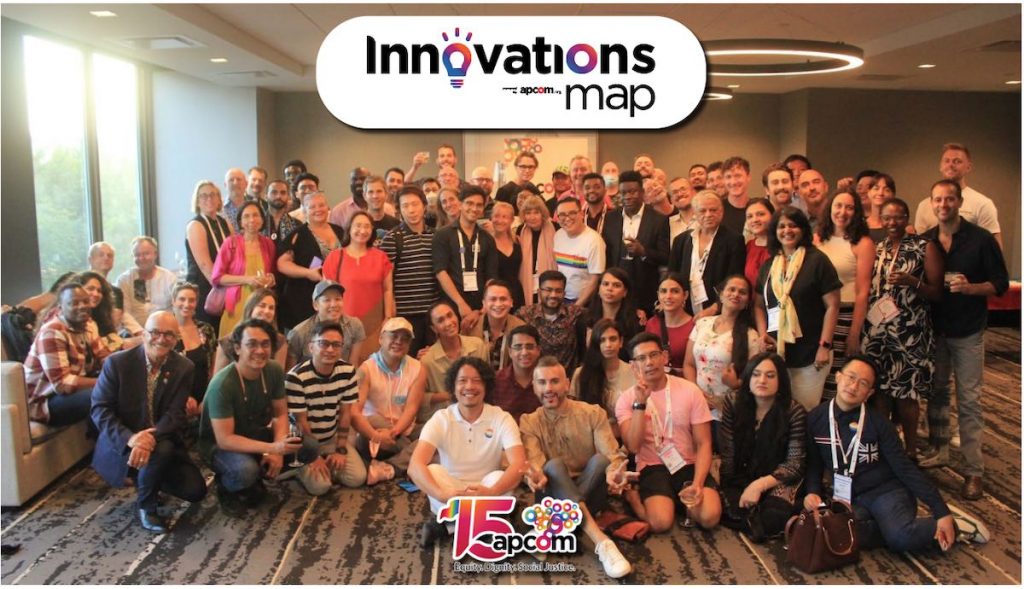
www.innovationsmap.asia – This resource hub aims to provide communities with information to facilitate south-south learning and sharing through community-generated data and research. Bearing the name ‘innovations’, the online resource hub will also include information on Pre-Exposure Prophylaxis (PrEP), HIV self-testing (HIVST), differentiated HIV service delivery and community models of HIV services in response to COVID-19, as well as undetectable equals untransmissible (U=U).
Oral Pre-Exposure Prophylaxis (PrEP) and long-acting injectable PrEP are two of the most effective biomedical tools for preventing HIV transmission. However, despite their proven efficacy, uptake across Asia and the Pacific remains critically low. According to UNAIDS (2024), an estimated 6.9 million people are living with HIV in the region, accounting for nearly 23% of all new HIV infections globally. To effectively address the epidemic, community-based organisations (CBOs) must play a central role in advocating for, implementing and sustaining PrEP services that meet the needs of key populations.
PrEP has been demonstrated to be highly effective in preventing HIV acquisition among men who have sex with men (MSM), transgender women, and other key populations. Despite a decade of evidence supporting its effectiveness, PrEP uptake in Asia and the Pacific remains far below global targets, primarily due to limited domestic investment, service capacity gaps and policy barriers. The absence of sustainable financing and integration into national health systems continues to hinder expansion and accessibility.
As of the end of 2023, there were approximately 204,000 PrEP users in the Asia-Pacific region, 98% short of the 8.2 million target by 2025. While countries such as Australia, Thailand and Viet Nam have achieved notable progress, others, including the Philippines, Nepal and Cambodia, are only beginning to scale up.
Structural and systemic barriers persist, including:
- Limited awareness and demand generation among key populations;
- Cost and affordability issues, especially where PrEP is not subsidised;
- Service models that are not community- or people-centred, making access difficult for MSM and transgender persons;
- Regulatory and policy restrictions, such as the lack of PrEP inclusion in national prevention guidelines or reimbursement systems.

At the policy level, only about two-thirds of countries in the region have adopted the WHO’s PrEP recommendations, and large-scale implementation remains confined to a few countries. Moreover, no systematic regional assessment has yet been conducted to map the specific barriers, gaps and enablers of PrEP scale-up across different contexts. To achieve meaningful and sustained reductions in new HIV infections, a combination prevention approach offers the strongest potential. This approach involves the strategic integration of biomedical, behavioural, and structural interventions, including PrEP, HIV self-testing (HIVST) and antiretroviral therapy (ART) to achieve U=U (Undetectable = Untransmittable).
In the current political and funding environment and amid rising HIV cases in several countries, community-led organisations are at the forefront of advocating for and delivering combination prevention. When supported with adequate resources and policy alignment, KP-led service providers can ensure that comprehensive prevention options are accessible, acceptable and equitable, helping countries meet the 2025 regional targets and sustain progress toward ending AIDS as a public health threat by 2030.
APCOM continues to work with our communities and stakeholders to ensure oral and injectable PrEP can be accessed by our communities at scale and sustainably in Asia and the Pacific.