“Let us be steadfast in our commitment to continuous engagement, robust advocacy, and meaningful action. Today’s discussions should mark the commencement of a series of concrete actions and collaborations. Together, with institutions like the ADB and through our collective dedication, we can ensure that the rights and health of LGBTQI+ individuals are championed at all levels of society.”
Eamonn Murphy
“UNAIDS advocates for a clear message: ending inequalities is essential to ending AIDS. The inclusion of LGBTQI+ individuals in economic activities not only promotes public health but also strengthens the fight against HIV/AIDS by ensuring that everyone, regardless of their SOGIESC, has access to the necessary resources and healthcare.”
Ratu Epeli Nailatikau

Supported by Global Affairs Canada
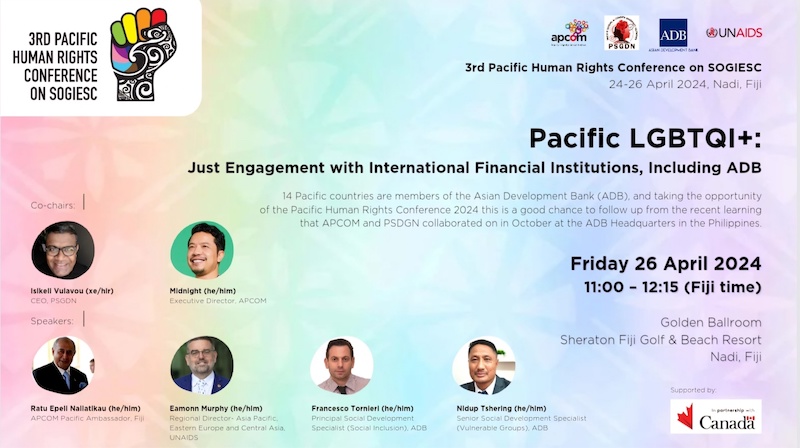
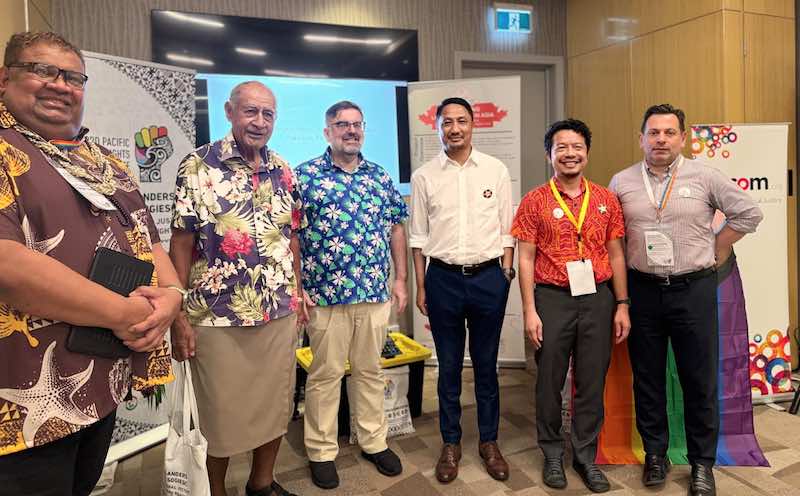
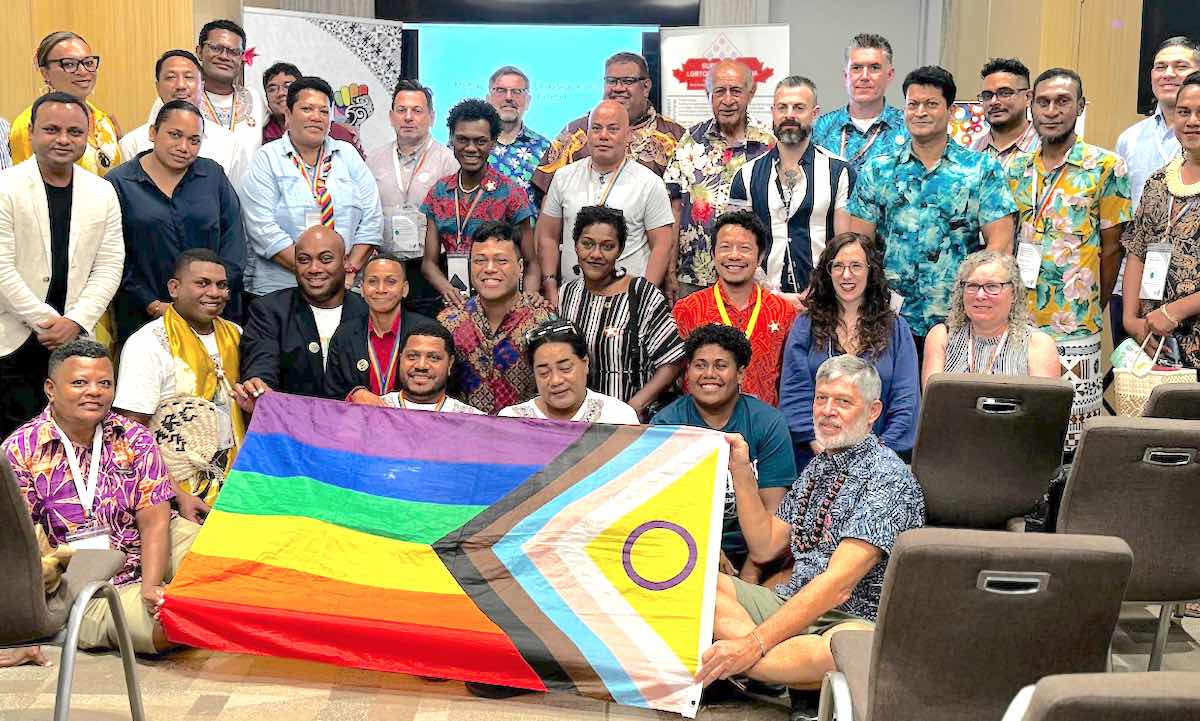
Taking the opportunity of the Pacific Human Rights Conference 2024 as a good chance to follow up from the recent learning that APCOM and PSDGN collaborated on in October at the ADB Headquarters in the Philippines in 2023 (read about the Asian Development Bank Learning week – here). The collaboration between APCOM, PSGDN, UNAIDS and ADB – to ensure that the session allows more LGBTQI in the Pacific to engage more with the ADB for the social and economic inclusion of LGBTQI and the community can also provide feedback to the ADB on the realities of LGBTQI in the region, particularly when it comes to intersectional issues such climate change as 14 Pacific countries are members of the Asian Development Bank (ADB).
The session, supported by Global Affairs Canada, started with opening remarks by Eamon Murphy (Director, Regional Support Teams for Asia Pacific and Eastern Europe and Central Asia regions). He emphasized the impact of climate change in the Asia Pacific region and the importance of community empowerment. He stressed the integration of environmental and social protection and suggested that community partners need to be involved for economic benefits. Furthermore, he highlighted the importance of aligning the session’s conversation with the Global AIDS Strategy.
Ratu Epeli Nailatikau (former President of Fiji, UNAIDS Goodwill Ambassador for the Pacific, and APCOM Pacific Ambassador), delivered a speech on SOGIESC and Economic Inclusion in the region, the importance of gathering data on the social and economic policies affecting LGBTQI+ individuals to inform future policy decisions. He highlighted that a system should be established to collect this data. Moreover, projects implemented by community partners in the Pacific should undergo assessment for their social and economic inclusivity, and lastly, to effectively advocate and create impact, capacity building training is required for LGBTQI+ communities in the Pacific.
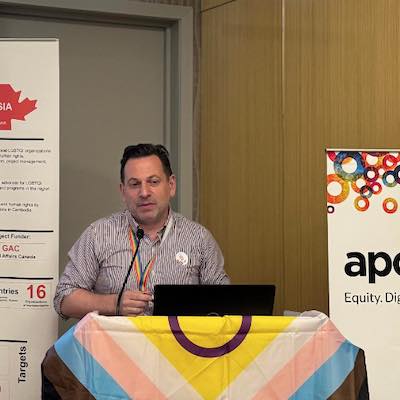
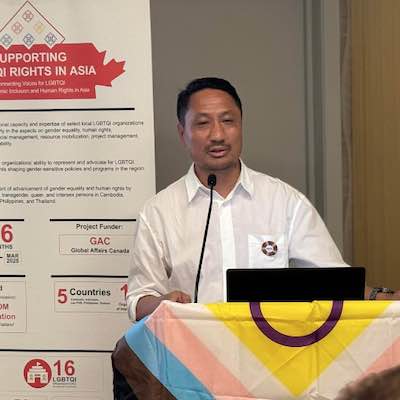
The session was well attended by 40 people, and Francesco Tornieri (Principal Social Development Specialist – Social Inclusion) and Nidup Tshering (Senior Social Development Specialist – Vulnerable Groups), presented also centered on the environmental and social framework and highlighted the ADB’s efforts in addressing LGBTQI+ issues in the region. They highlighted the principles that guide the ADB engagement in SOGIESC inclusive development in developing country members of the ADB. Additionally, they provided an overview of the ADB’s Safeguard policy update (called Environmental and Social Framework – ESF) which has increased focus on non-discrimination and risks to disadvantaged or vulnerable people, including among other sexual orientation and gender identity.
Key points from the ABD’s legal study on barriers to SOGIESC inclusion was presented, which covers three main areas;
- Areas for law and policy reform
- Areas for improving social services
- Areas for SOGIESC protection
ADB also developed a road map for SOGIESC Inclusive Development which aligns with ADB strategy 2030 and focuses on poverty reduction and inclusion which includes two phased approach to advancing SOGIESC inclusive development in ADB operations;
- Phase 1: Strengthening ADBs policies and Capacity for Diverse SOGIESC inclusion
- Phase 2: Operationalizing ADB policies and guidance note for SOGIESC inclusive development
This session concluded with a discussion of financial strategies that can support diverse SOGIESC-inclusive development.
Following the above session, the participants shared some comments from the community;
Besides Fiji and PNG, ADB should also focus on other countries in the Pacific region.
Communities should be supported for the advocacy work, and let communities lead the advocacy work as they have more insights and understanding about the local contexts
ADB should involve local experts for the ADB related work at the country level
Key Recommendations from the session that were included in the Outcome Statement:

Key Recommendations
- Actively engage governments to enact policy changes, particularly regarding outdated laws criminalising LGBTQI+ individuals.
- Prioritise improving accessibility to social services, with a focus on healthcare, as a crucial aspect of LGBTQI+ inclusion.
- Foster broad engagement with stakeholders, including government officials and civil society, to advance LGBTQI+ rights and inclusion.
- Conduct economic studies to quantify the costs of discrimination and advocate for policy Changes.
- Develop a comprehensive roadmap for action to guide the IFI, ADB efforts in LGBTQI+ inclusion, emphasising collaboration and accountability
- Mobilise resources to support legal reforms, service accessibility, and accountability measures outlined in the Operational Response Framework.
- Collaboration with Financial Institutions: There was a call for CSO collaboration with financial institutions like the ADB to ensure LGBTQI+ considerations are integrated into project planning and implementation. The ADB’s engagement with LGBTQI+ issues was acknowledged, with a focus on incorporating LGBTQI+ considerations into ADB operations.
- Concrete Actions and Collaboration: advocating for actions and collaborations between PIDSOGIESC+ communities, financial institutions, governments, and other partners to champion human rights and health at all levels of society.