
Midnight
APCOM
Agenda Item 5:
Update on strategic human resources management issues

Thank you, Chair.
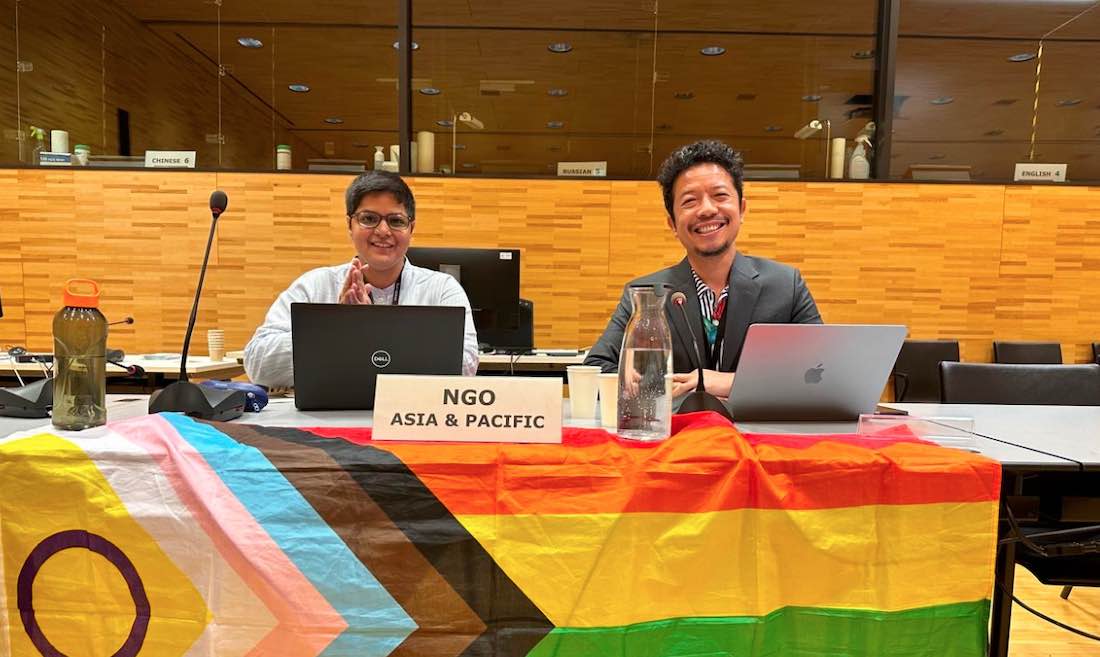
I speak on behalf of the NGO Delegation.
First, I would like to honor John Rock, a distinguished member of the NGO Delegation of the UNAIDS PCB, who represented Asia and the Pacific between 2013 and 2014 and passed away recently. John’s dedication and passion for international development in the field of HIV and AIDS and for empowering people living with HIV left an indelible mark on countless lives and communities.
The epidemic continues to affect key populations and their sexual partners disproportionately. Key populations – which include gay men and other men who have sex with men, people who inject and use drugs, prisoners and detainees, sex workers, and transgender people – constitute small proportions of the general population but face elevated risks of HIV infection. This is, in part, because of the discrimination, criminalization, harassment, and social exclusion that they experience.
Despite the much-reduced personnel, we were glad to see efforts to pilot an initiative to reach out to young people from key populations through the Young Leadership Fellowship to create opportunities to build and strengthen personal and community leadership skills and to foster a vibrant network of change leaders within UNAIDS – and we look forward to seeing key populations being an integral part of UNAIDS staff to ensure the sustainability of community leadership, and community-led efforts as we near 2030.
Harry Prabowo, from Indonesia, working at the Asia Pacific Network of People Living with HIV, told us in the 2023 World AIDS Day report that, “I am alive because of the community. When I was diagnosed with HIV in Jakarta in 2010, I had a CD4 count of 20. Staff at my nongovernmental organization took me to the doctor. They took turns looking after me. Today, I not only have an undetectable viral load, but I also have the confidence to embrace life fully and proudly as a gay man living with HIV. Treatment on its own could not get me here. I have been lucky. But to ensure the world can end AIDS as a public health threat, community-led support cannot be left to luck.”
Finally, we look forward to seeing the implementation of the People Strategy, which aims to support staff well-being through investment in learning, development, and growth that enhances gender equality, diversity, equity, inclusion, antiracism, respect, and working differently.
Sonal Giani
IPPF
Agenda Item 7:
Organizational Oversight Reports

Thank you, Chair.
On behalf of the NGO Delegation, I want to thank you for the comprehensive Organizational Oversight Reports presented at this 54th PCB meeting. We recognize and appreciate the hard work and dedication of the UNAIDS management and oversight bodies.
As we review these reports, let’s remember that behind every statistic are real people and communities relying on our collective efforts.
Imagine Maria, a community health worker in a remote village, tirelessly supporting HIV-positive individuals.
Think about Vivek, a young man in an urban center, relying on a community-based organization for his HIV treatment and support.
When we hear about the closure of 12 audits and a 69% reduction in overdue audit recommendations, we see that resources are better managed. This is crucial for people like Maria and Vivek. For Maria, it means she has the resources to provide consistent care. For Vivek, it means he continues to receive his essential treatment.
Yet, we need to keep pushing for better.
The high residual risk associated with Direct Financial Cooperation (DFC) and Programme Funding Agreements (PFAs) is a major issue that screams for attention. These systems are vital for channeling resources to local initiatives that support key populations. When these systems fail, the impact on our communities is devastating.
Maria’s clinic might not get the funding it needs. Vivek’s support group might have to shut down. The program must work to fix the inefficiencies in DFC and PFAs to ensure resources reach those who need them most.
There are also other serious challenges we must address. The reports highlight an increase in allegations of non-financial misconduct, particularly sexual exploitation, harassment, and abuse. This is unacceptable. These issues directly impact the safety and trust of our communities. We need UNAIDS to act decisively. Strengthen measures against sexual misconduct. Fully implement WHO’s Policy on Preventing and Addressing Sexual Misconduct (PASM) and ensure continued mandatory training.
Maria and Vivek need to know they can trust the systems meant to support them.
Ensuring robust governance, accountability, and ethical conduct within UNAIDS is not just about strengthening the organization; it’s about building the trust and support of the communities we serve.
Thank you.