
Contributor:
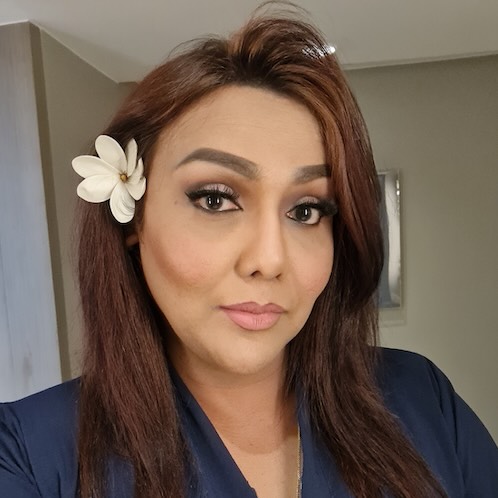
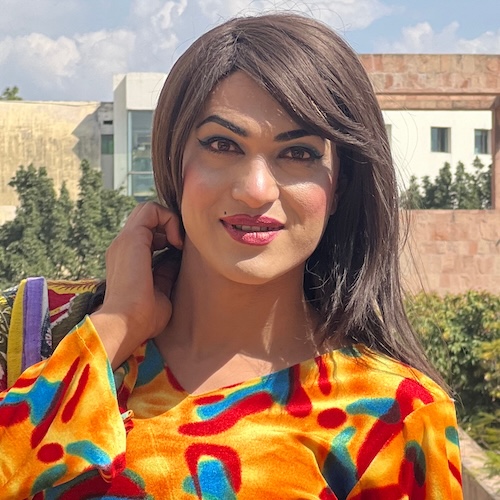
Farha Farin
Farha Ahmed Farin, a trans woman from Bangladesh, is a passionate advocate for sexual and gender-diverse communities. Born in Sirajganj and raised in Dhaka, she holds a Master’s degree in Management from the National University of Bangladesh. Farha has over 12 years of experience working on critical issues like sexual and reproductive health rights (SRHR), HIV/AIDS reduction, mental health, and human rights. She currently serves as a Liaison Officer and Mental Health Counselor at Bandhu Social Welfare Society, a pioneering organization dedicated to improving the lives of gender-diverse individuals in Bangladesh.
Farha’s advocacy journey began during her student years, volunteering for causes like human rights, combating sexual abuse, and promoting child protection. Since joining Bandhu in 2011, she has led various initiatives focused on SRHR, comprehensive sexuality education, and fostering social acceptance for gender-diverse communities. She has also received extensive training in mental health counseling, human rights, and gender and sexuality. As an international fellow through the FK Norway exchange program, Farha expanded her impact by working across South Asia to promote equality and inclusion.
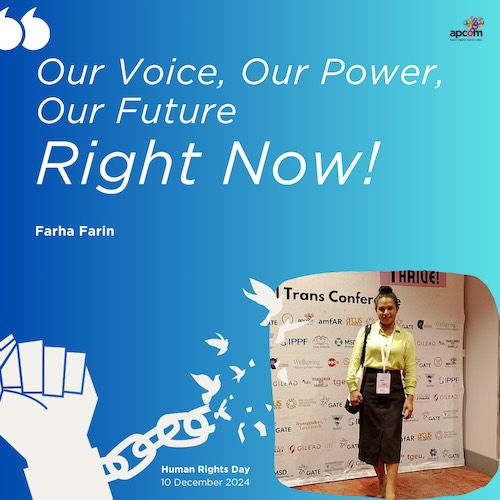
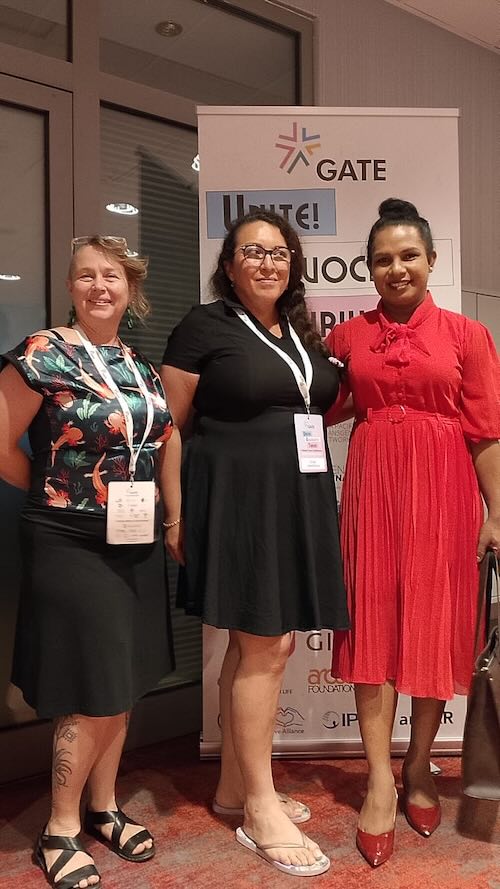
APCOM was one of the partners of the Unite! Advocate! Thrive! Global Trans Conference 2024
held prior to the AIDS 2024 in Munich, Germany in July 2024.
We brought together trans and gender diverse activists from Asia and the Pacific to address the lack of specific and inclusive global strategies
for our communities, and to formulate a unified response to anti-gender and anti-rights opposition.
What are your main reflections/take away from the recent Unite! Advocate! Thrive! Global Trans Conference 2024?
The Unite! Advocate! Thrive! Global Trans Conference took place on 20–21 July 2024 in Munich, Germany, bringing together trans advocates from around the world. Over two days, discussions explored the realities of being trans and gender diverse in an increasingly hostile world, showcasing our collective resilience and identifying challenges ahead.
The conference was structured into three key tracks: human rights, health, and movement building. The human rights track focused on addressing global issues faced by trans communities and developing actionable strategies.The health track explored themes like access and equity, community-led research, inclusive co-design, and differentiated service delivery. The movement building track emphasized creating lasting networks, resilient communities, and strategic alliances to overcome challenges.
Personally, the conference was a transformative experience. Representing myself as a trans woman and activist from Bangladesh, I gained invaluable insights and ideas to empower the trans community in my country. Overall, it was a meaningful and impactful gathering of global trans leaders, united in forging a path toward progress and meaningful change for the transgender population.

What is the situation of trans people in your country?
The current situation has become increasingly critical due to the complex and volatile political landscape, as well as the growing discourse surrounding gender movements within the country. As a transgender activist, I am facing a wide range of challenges and threats, not only from politicians and Islamic scholars but also from certain groups, including students, followers, and affiliates of these political figures and religious leaders. These obstacles have made it significantly more difficult to advocate for equal rights and continue the fight for inclusivity and social justice.
What and how are you/your organisation doing to address these challenges?
I tried to build a network of allies within the transgender community and progressive groups, fostering unity and strength against external threats. To manage the emotional toll of activism, I prioritize my mental health through therapy and mindfulness. By connecting with national and international human rights organizations, I gained guidance and credibility, amplifying my efforts. Collaborating with supportive politicians, scholars, and influential figures also strengthened my advocacy, providing authority and expertise to counter opposition effectively.
What support do you/your organisation need?
Given the situation, there is a critical need for safety and security training to protect individuals from potential threats and violence. Emergency funding support is essential to provide immediate relief during crises, alongside access to shelters that offer a safe space. Additionally, job replacement programs, such as internships and fellowships, are vital to help individuals rebuild their lives and gain financial independence, fostering long-term stability and empowerment. These measures are crucial in ensuring the well-being and resilience of the community.
See also: