

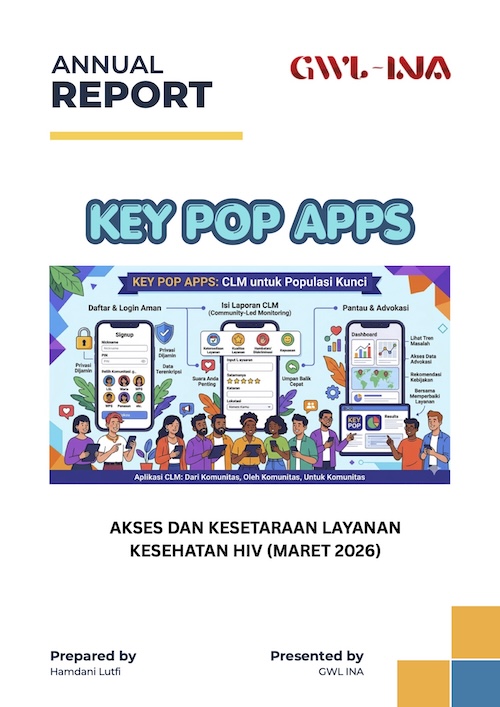
GWL-INA, APCOM’s CODE Strategies partner in Indonesia, is moving its community-led monitoring from the testJKT platform to a national rollout through KeyPop. Its first analysis of the KeyPop pilot data, Access and Equity of HIV Health Services (March 2026), offers an early picture of what key populations experience when they walk into a clinic.
The survey drew on 54 respondents who visited health facilities between late 2025 and early 2026, mostly community health centres (Puskesmas) in Malang (East Java) and Medan (North Sumatra), with others in Bogor, Padang and Palu. Most went to collect antiretroviral treatment (ARV), take an HIV test or access PrEP. GWL-INA scored services against the AAAQ framework: Availability, Accessibility, Acceptability and Quality.
The headline numbers
- Overall satisfaction: 4.8 out of 5
- Availability: 5.0 — respondents reported almost no ARV stock-outs, and condoms and lubricants were consistently available
- Acceptability: 4.9 — staff were most often described as “friendly”, “polite” and “non-judgemental”
- Quality: 4.6 — health workers explained side effects and treatment plans clearly
- Accessibility: 4.2 — the lowest score, and where most of the problems sit
GWL-INA reads the acceptability score as a sign that years of sensitivity training for health workers are paying off. But the comments behind the numbers show where people still fall through the gaps.
Where the gaps are
- Hidden costs. Although most respondents are covered by the national health insurance scheme (BPJS Kesehatan), many still paid IDR 10,000–20,000 in cash for registration or administration. For people on low incomes, these small, repeated costs can be enough to delay a visit or interrupt treatment.
- Rigid opening hours. HIV and ARV services are mostly open only from morning to midday, which forces working people to choose between a day’s pay and their treatment.
- Confidentiality in the waiting room. Staff may be kind, but shared waiting areas and patients’ names being called aloud leave people afraid their HIV status will be exposed.
- Fragmented services. In Medan, ARVs are available but CD4 and viral load tests often are not, so patients are referred to district hospitals just to monitor their treatment. Medicines for opportunistic infections also run short, pushing people to buy them privately.
- Limited PrEP availability. PrEP remains concentrated in pilot sites, so it is technically available but out of reach for most people outside city centres.
- Registration bottlenecks. Consultations are quick, but manual and unclear queuing systems create long, unfair waits.
From findings to action
GWL-INA has made recommendations to the Ministry of Health and district health offices: abolish administrative fees for HIV services under BPJS, introduce transparent digital queues, make CD4, viral load and opportunistic infection medicines available at Puskesmas level, offer afternoon or fast-track services, and audit waiting-room layouts for privacy.
It also asked APCOM to improve KeyPop itself by adding a field to report out-of-pocket fees, a rating for privacy in the waiting room, real-time tracking of waiting times from registration to medication, and simpler navigation for users with low digital literacy. This is CLM working as intended: communities shaping the tool that monitors their own care.
The wider picture
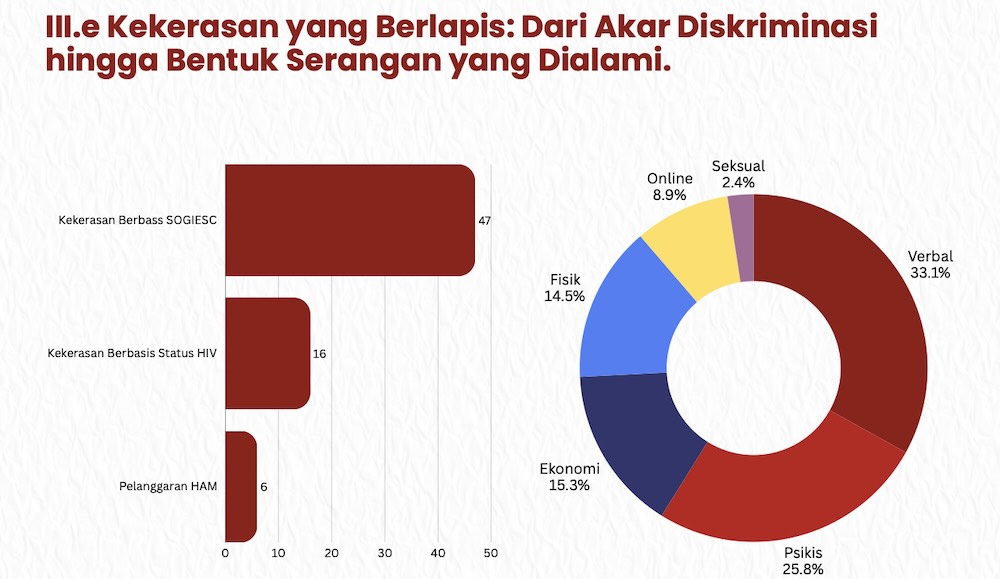
The survey describes what happens inside the clinic. GWL-INA’s separate situation report, Living in the Shadow of Stigma (March 2026), shows what happens outside it. In 2025 it documented around 170 victims of violence and rights violations across the same five cities, including police raids in Bogor and Surabaya where HIV tests were reportedly carried out without informed consent. The resulting chilling effect, it warns, keeps people away from testing and treatment. A friendly clinic is only part of the answer when it is not safe to be seen walking through the door.


“Through the KeyPop App, community-led monitoring transforms key populations in Indonesia from passive recipients of healthcare into active drivers of their own health rights. By turning lived experiences into precise, evidence-based data, we break down systemic barriers and build inclusive, person-centered health services. Our data is not just numbers—it is our voice, our dignity, and our blueprint for national change”
Jian Nova
Communication and Media Officer
GWL-INA
Source: GWL-INA, Access and Equity of HIV Health Services (KeyPop Apps, March 2026), prepared by Hamdani Lutfi; GWL-INA, Living in the Shadow of Stigma: Situation Report on Violence and Rights Violations Based on SOGIESC and HIV Status (March 2026).