Health is a human right, and almost every country in our region has signed up to it. Yet LGBTQIA+ people and other key populations still face discrimination, criminalisation and gaps in legal protection that keep quality care out of reach. The trouble is that much of this harm never shows up in official data.
To close that gap, APCOM worked with Shared Planet on Towards Equitable Healthcare for All: LGBTQIA+ Human Rights Indicators for a Digital Community-Led Monitoring Tool. Produced under the CODE Strategies project, funded by the Elton John AIDS Foundation, the report develops human rights indicators for KeyPop across six countries: India, Indonesia, Nepal, the Philippines, Thailand and Viet Nam. Shared Planet is a global research and advisory consultancy, with a team based in the UK, Canada and Morocco, that supports organisations working for progressive change on social and environmental issues, with a focus on the Global South. Its team of Yiğit Gürpınar, Arimbi Wahono, Sze Vei Leong and Alessandra Zannier led the literature review and the consultations with experts and community partners behind the report.
The research combined a review of literature published between 2010 and 2024 with interviews with experts, including from UNAIDS and UNDP, and with community networks in each country: The Humsafar Trust (India), GWL-INA (Indonesia), Blue Diamond Society (Nepal), HASH (the Philippines) and CARMAH (Viet Nam). These partners reviewed each country’s indicator list to ensure it reflects local realities.

Five takeaways
- Rights are at stake before anyone reaches the clinic.
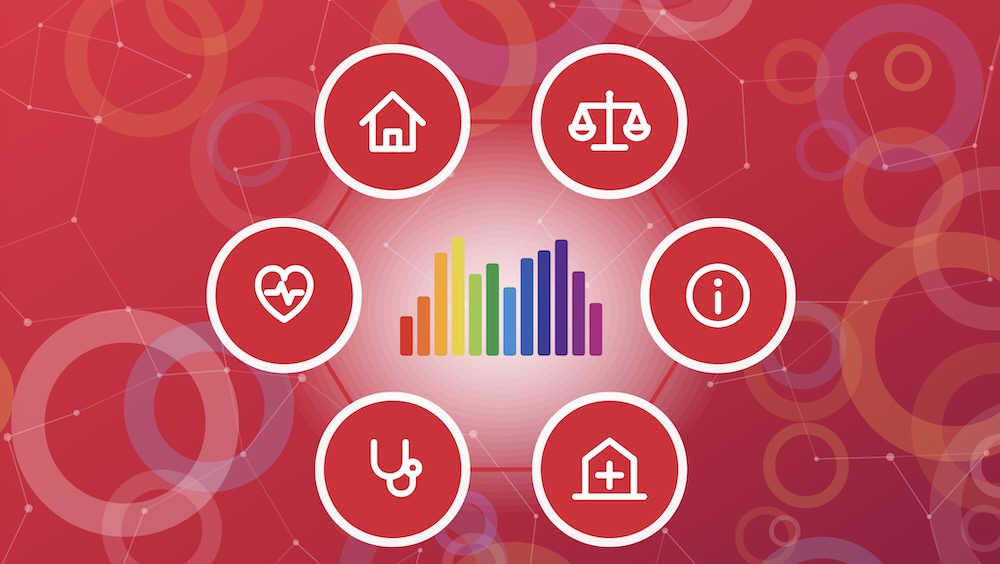
Social determinants such as family rejection, housing, income and insurance may account for up to 55% of health outcomes. In Indonesia, for example, health insurance is registered by family unit, so some people avoid enrolling rather than reveal their identity to relatives. Indicators therefore follow the whole patient journey: before arrival, at the facility, and in aftercare. - Small moments in the clinic decide whether people come back.
Registration forms with no room for gender diversity, misgendering, invasive questions, unclear consent and breaches of confidentiality all discourage people from seeking care. The indicators capture these moments, not just whether a service exists. - Global frameworks need community data to work.
The indicators build on the Yogyakarta Principles and the Availability, Accessibility, Acceptability and Quality (AAAQ) framework used by WHO and the UN Human Rights Office. The report notes that the UNDP LGBTI Inclusion Index has so far relied on government data, which tends to miss rural and marginalised people. Community-generated evidence like KeyPop’s can fill that gap. - KeyPop is growing beyond HIV service delivery.
APCOM’s existing CLM tool focused on HIV prevention services. The new indicators extend it to the wider human rights violations LGBTQIA+ people experience in health care, including mental health, gender-affirming care and the needs of people facing several forms of marginalisation at once. - Data is power when communities own it.
In the report’s own words: “When communities lead the process, data becomes more than a metric – it becomes a vehicle for empowerment, resistance, and long-term transformation.”
Already making a difference
The framework is already being used. GWL-INA’s first KeyPop analysis in Indonesia scored services against AAAQ and found that staff attitudes scored highly while waiting-room confidentiality did not. That is exactly the kind of gap a human rights lens is designed to reveal. In the next phase of CODE Strategies, the country-specific indicators will be built into KeyPop, so communities in all six countries can document violations and use their own evidence to push for change.

“Discrimination against LGBTQIA+ people and other key populations in healthcare is too often dismissed as a set of isolated incidents. With the KeyPop app, community-led monitoring turns lived experience into systematic evidence that facility managers, ministries and donors cannot ignore. The indicators were shaped by the organisations who will use them, which is what gives them their strength.”
Yiğit Gürpınar
Senior Consultant
Shared Planet