
The Asia-Pacific Region continues to be one of the largest HIV burdens globally, with millions of people living with HIV and hundreds of thousands of new infections each year. While domestic financing has increased, many countries in the region still rely heavily on international donors to sustain their HIV prevention programmes.
Recent shifts and disruptions in donor support are already placing national HIV responses at risk, resulting in interruptions in community-led outreach.
The APCOM Regional Community Caucus, and community-led and key population organisations across Asia-Pacific put forward this five‑point priority framework to guide the establishment of a Prevention Fund that is fit for purpose, responsive to regional realities, and capable of driving long-term impact.
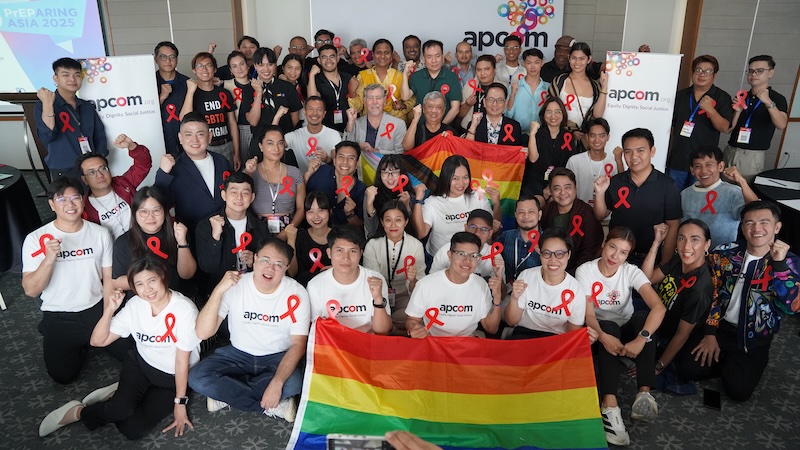
This framework is grounded on the five priorities that the communities developed during the APCOM Community Summit: PrEPARING Asia 2025.

| Priority 1 Ensure Funding Mechanism for Prevention Is Community-Driven The Prevention Fund must be grounded in community leadership from design to implementation. Decision-making structures must reflect the needs of key populations and community organisations across the region. A community-driven mechanism ensures that prevention investments respond to actual needs of people most affected by HIV. |
| Priority 2 Invest in Scaled, Community-Led HIV Prevention A dedicated prevention investment must prioritise the scale up of effective HIV prevention,especially oral and injectable PrEP. This requires sustained support for outreach, demandgeneration, and delivery models that reach key populations through community-led anddifferentiated approaches. This includes explicit attention to underserved groups who continue to face heightened vulnerability and remain insufficiently reached by existing programmes including transgender persons, young MSM, online and freelance sex workers, people who use drugs, and other communities navigating legal, social, and economic barriers to accessing services. Strengthening community systems, ensuring accountability through community-led monitoring, and supporting enabling environments are essential foundations for reducing new HIV infections. |
| Priority 3 Ensure Community-Led and Accountable Governance The Prevention Fund must be guided by governance that is community-led, transparent, and rooted in regional diversity. These governance arrangements must include explicit mechanisms to ensure meaningful representation of transgender communities, sex workers, people who use drugs, young key populations, and other groups facing legal, social, and economic marginalization. Structures that oversee financing and resource allocation to communities must also reflect the realities of low- and low-middle-income countries and ensure access to resources. |
| Priority 4 Provide Accessible and Flexible Prevention Funding Prevention investments must be accessible to all community-led organisations, especially those who work closely with key populations. Prevention investments must offer flexible support to community-led organisations that can respond to immediate needs and long term priorities. The Prevention Fund must ensure simplified, transparent, and supportive processes that allow these organisations to access resources without burdensome administrative requirements. This includes providing technical assistance, building grant management skills, and ensuring that funding flows directly to organisations that have the closest reach to key populations. As an accessible and flexible financing, the Regional Prevention Fund supports continuity of services even in contexts of donor transitions. |
| Priority 5 Strengthen Regional Collaboration and Community Capacity Prevention funding must invest in the strengthening of community-led organisations to effectively delivery prevention programmes. This includes support for cross country learning, technical strengthening, and the skills needed to access and manage alternative resources for prevention. Communities must also be supported to build resource mobilization strategies, including domestic resource mobilisation, to ensure long-term operational and financial capacities beyond donor funded programmes. Capacity strengthening must be inclusive and responsive to the needs of underserved populations. This includes building the leadership, technical skills, and organisational capacities of transgender communities, sex workers, people who use drugs, young key populations, and other groups that are often excluded from formal programming and decision‑making spaces. Investments should support community-led organisations to design and implement approaches that reach individuals outside traditional health systems, ensuring prevention services are accessible to those least served. |